Not sure if you want a baby, or just terrified of pregnancy and birth? When fear is loud, it can drown out your own answer. This post will help you start telling the two apart, without anyone pushing you either way.
⏱️ Read time: 7 minutes — or jump to what you need most:
Yes. No. Maybe.
On Sunday, holding your friend's newborn, something in you melts. I want this. By Wednesday, after one birth story on Instagram, your stomach drops. I could never. By Friday you've decided you're probably just not the maternal type. And next month, it all starts again.
So which one is true?
Here's what I most want you to know. You're not indecisive, and you're not broken. You might be trying to answer one of the biggest questions of your life while fear is shouting over the top of it.
I work with women who are frightened of pregnancy and birth, and I won't tell you what to choose. What I can do is help you tell the difference between your fear and your wish.
Why it's so hard to tell
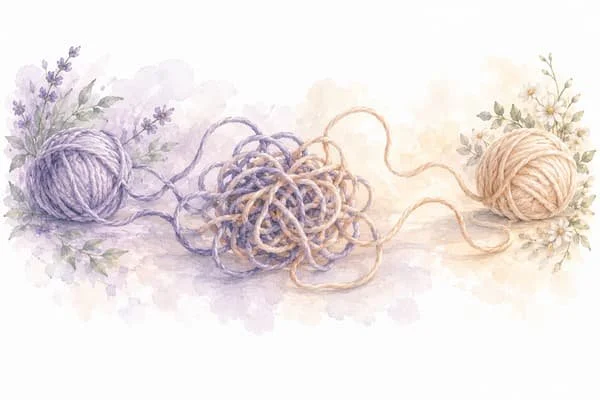
Wanting a baby and being frightened of pregnancy and birth can live in the same body at the same time. They don't cancel each other out. They tangle.
And fear is sneaky. It rarely says "I'm terrified of giving birth." It's far more likely to show up as a heavy, vague feeling of not now, not sure, maybe never. Because it feels like a decision, it's very easy to mistake it for one.
Then there's everyone else. Friends who say you'll "just know" when you're ready, as if the fear will lift one morning. Family hints about grandchildren that make you dig your heels in. Corners of the internet telling you motherhood is either everything or a trap. And a partner with feelings of their own.
No wonder your own voice is hard to hear.
How fear disguises itself as "I'm not sure"
When something frightens us, our minds are brilliant at finding sensible reasons to stay away from it. In CBT we call this avoidance. And with pregnancy, it can sound incredibly reasonable.
Maybe I'm just not maternal. The timing isn't right. I'm probably too selfish. I'd be a terrible mother anyway. The world's too much of a mess. We're happy as we are, so why rock the boat?
Any of these can be true. Some women genuinely don't want children, and that's a full and valid life. But here's the thing. Notice what happens to these reasons when you take the fear out of the picture. If they quietly melt away, the fear may have been doing the talking.
And watch the finishing line. First it's the house move. Then the job. Then money. Then your age.
If the reasons keep changing, the real obstacle probably isn't on the list.
Six questions to untangle fear from wish
These aren't a test, and there are no right answers. They're questions I often explore with women in therapy. Grab a notebook if you like, and be gentle with yourself. You can always come back to them next week.
If you could have a child without being pregnant or giving birth, would your answer change? If "no" turns into "maybe", fear is very likely part of the picture.
Where does the "no" get loudest? Picture a positive test. A 20-week scan. Labour. A newborn at 3am. A five-year-old at the kitchen table. A teenager slamming a door. Notice where your body tightens, and where it softens.
What happens when your period comes? Pure relief? Or relief, then a pang of sadness or guilt? That mix often points to a wish that fear is blocking.
How do you feel around other people's babies? Not bothered? Or a pang, a bit of envy, an urge to leave the room? Avoiding something because it hurts is very different from not being interested.
Picture yourself at 50. One life with children, one without. Which feels like a loss? Which feels light?
Whose voice is it? When you hear "I couldn't cope" or "I'm not cut out for this", does it sound like you? Or like something you picked up growing up?
If your answers are messy and contradictory, that's completely normal.
It usually means fear and wish are still tangled, not that you're doing it wrong.
When the clock makes it louder
For years, this question can sit quietly at the back of your mind. Then a birthday, a friend's pregnancy announcement or a comment from your GP drags it right to the front.
And now there are two fears. Not just "what if I go through pregnancy and birth?" but "what if I leave it too late and regret it forever?"
It can feel like being squeezed from both sides. Too scared to try. Too scared not to.
Time pressure is real, and it's fair to take it seriously. If you have questions about your fertility, your GP is a good place to start. But panic is a poor decision-maker. A choice made in a rush to make the fear stop rarely feels like yours afterwards.
Working on the fear doesn't use up your time. Very often, it's the thing that finally lets you decide, one way or the other, instead of putting it off for another year.
You don't have to decide first
A lot of women wait until they've worked out whether they want children before getting help with the fear. It makes sense. Why work on fear of pregnancy if you might not want to be pregnant?
But it usually works the other way round. While the fear is loud, it's almost impossible to hear what you really want. Turning the fear down is what lets your own answer come through.
Imagine choosing a holiday while you're terrified of flying. Every destination that involves a plane feels like a no. You might decide you simply prefer staying at home, and you might be right. But you can't really know until the fear of flying stops making the choice for you.
When the fear settles, some women realise they've wanted a baby for years. Others realise that, even without the fear, they don't.
Both are good outcomes, because the choice is finally yours.
What if the answer is no?
Some women worry that therapy for tokophobia is quietly designed to get them pregnant. Let me be really clear: it isn't. Not with me.
A life without children can be full, meaningful and happy. If you work through the fear and find that you don't want to be a mother, that's not therapy failing. It's a decision made with clear eyes, and that can bring its own kind of peace.
It can bring grief too, even when it's the right choice. Letting go of a life you once imagined is a real loss, and it deserves space.
What matters is that the choice comes from you. Not from fear. Not from pressure, guilt or the clock.
How therapy helps (without pushing you either way)
I don't have a hidden agenda. I won't nudge you towards motherhood, and I won't nudge you away from it. My job is to help you see clearly which part is fear, and which part is you.
We start by making sense of your story. Where the fear came from, what keeps it going, and what it might be protecting you from. For some women it goes back to a frightening birth story in the family, or a scene on TV that never quite left them. For others it's tied to a difficult childhood, a past loss or termination, or not feeling safe in their own body.
With CBT, we map how fear shapes your thoughts and choices: the sensible-sounding reasons, the avoidance, and the moments when the wish breaks through. Then, gently and at your pace, we work with the things that frighten you most, so they lose some of their grip.
With EMDR, we can work on the memories that feed the fear, so they stop feeling so raw. We can also use it to look ahead, picturing future moments like a positive test or the birth itself, and noticing how they feel once the fear has settled.
I'm a BABCP-accredited CBT therapist and a member of EMDR Association UK, working towards accreditation. I often blend the two.
What usually changes first is the urgency. The question stops feeling frantic. It becomes something you can think about calmly, and talk about with your partner without it ending in an argument or tears.
And often, for the first time in years, you actually know your answer.
Hi, I’m Aleksandra!
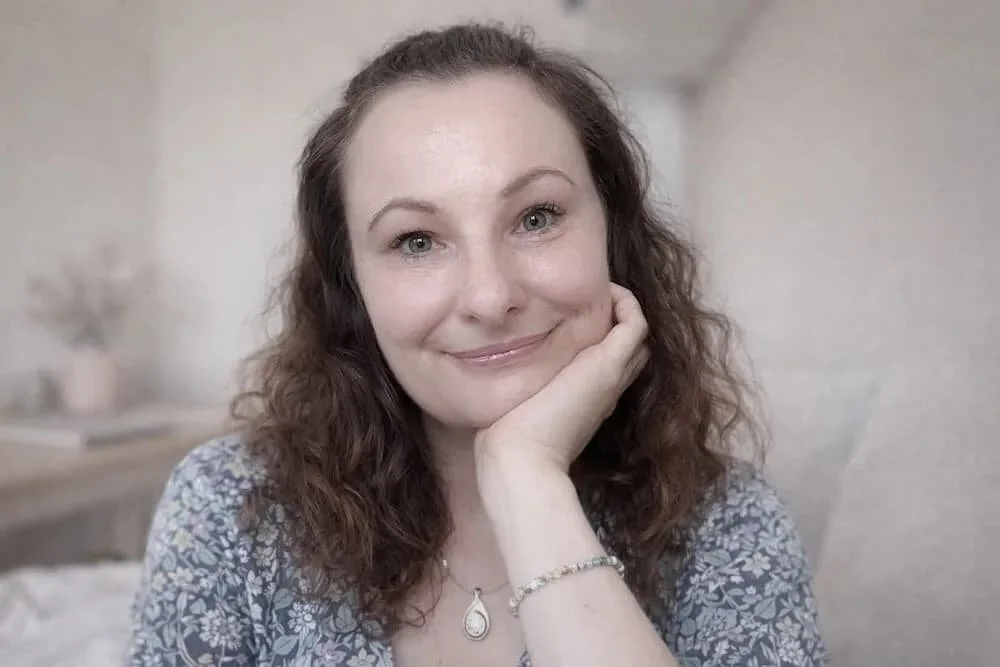
I'm a BABCP-accredited CBT therapist and a member of EMDR Association UK, working towards accreditation. I specialise in fear of pregnancy and birth, birth trauma, pregnancy after loss, and perinatal anxiety and OCD. I've spent around ten years in NHS Talking Therapies as a therapist and clinical supervisor. More about me.
Ready to talk?
If fear has been making this decision for you, you don't have to wait for it to lift on its own. You can get support now, before you've decided anything.
And if part of you is already thinking "maybe after Christmas" or "once things calm down", notice that. It's the same putting-off that keeps the question going round and round.
I offer online therapy across the UK and the EU. Sessions are £130, with weekly appointments available. You can book a free 20-minute conversation or email me. Getting in touch doesn't commit you to anything.
FAQ: Wanting a baby, fear and not knowing
-
Yes, very. It's one of the biggest decisions anyone makes, and mixed feelings are part of it for most people. Not knowing doesn't mean something is wrong with you.
-
Yes. Fear often hides behind reasons that sound sensible, like timing, money or "not being maternal". One way to check is to ask yourself whether your answer would change if pregnancy and birth weren't part of it.
-
Try to separate the conversation about fear from the conversation about wanting. Your partner may find it easier to support you once they understand that fear is part of your "not sure". Getting help with the fear can also take pressure off you both.
-
Then you'll have found your answer, and that's a good outcome. Therapy isn't about getting you pregnant. It's about making sure the choice is yours.
-
For many women, working on the fear is what finally lets them decide, instead of putting it off for another year. If you have questions about your fertility, it's worth talking to your GP alongside therapy.
-
For some women, knowing they can ask for one lowers the fear a lot. In the UK, if you're anxious about birth and ask for a caesarean, NICE guidance says you should be offered mental health support first. If vaginal birth still isn't acceptable to you after that, you should be offered a planned caesarean (NICE NG192). But for many women, the fear is about pregnancy as well as birth, so a caesarean doesn't answer everything.
-
Yes. In fact, it's often the best time. There's no pressure of a pregnancy, and you can work through the fear at your own pace.
Related Reading:
Want a Baby but Terrified of Pregnancy and Birth? You're Not Broken. For when you know you want a baby, but fear is in the way.
The Two-Week Wait When You're Scared of Birth. For when you're trying, and feel relieved every time your period comes.
Can't Stop Taking Pregnancy Tests? When Fear of Being Pregnant Takes Over. For when the fear of an accidental pregnancy runs your life.
Tokophobia therapy. How I work with fear of pregnancy and birth.
References & Resources:
Anxiety UK — support and information for phobias, including blood and needle phobia
NHS: Phobias — overview and treatment options
Tommy's: Fear of Childbirth (Tokophobia) — information and support
PANDAS Foundation — perinatal mental health support, helpline 0808 196 5026
NICE NG116 — Post-traumatic stress disorder — clinical guidelines underpinning trauma treatment
EMDR Association UK — about EMDR and the evidence base
If you're struggling to cope, having thoughts of self-harm, or feeling unable to keep going, please reach out to your GP, call Samaritans on 116 123, or go to A&E. You deserve support right now.
Let’s connect:Disclaimer:
The information provided in this article is for educational and informational purposes only. It is not intended to be a substitute for professional medical or mental health advice, diagnosis, or treatment. Always seek the guidance of your healthcare provider, mental health professional, or other qualified health provider with any questions you may have regarding your pregnancy or mental health.