About Your Perinatal CBT and EMDR Therapist - Aleksandra Balazy-Knas
If you've landed here, you're probably trying to figure out whether I understand what you're going through — or whether I'm another therapist who'll nod and say the right things but not really get it.
That's a fair question. Let me try to answer it.
Why "Unscrewing Motherhood"
When I started thinking about opening my practice, I kept coming back to one image.
A jar. Lid screwed on tight.
Inside: all the things you haven't said out loud. The grief. The shame. The "I think something is really wrong with me." The anger at what happened during your birth. The intrusive thoughts that make you feel scared of your own mind. The guilt that you somehow caused your miscarriage. The terror of doing this again. The numbness when you look at your baby and feel nothing.
On the outside? A label that says: "I'm fine."

This practice exists to unscrew that lid. Gently. At your pace. With someone who will hold space for everything that comes out — the good, the bad, and the ugly.
All of it belongs here.
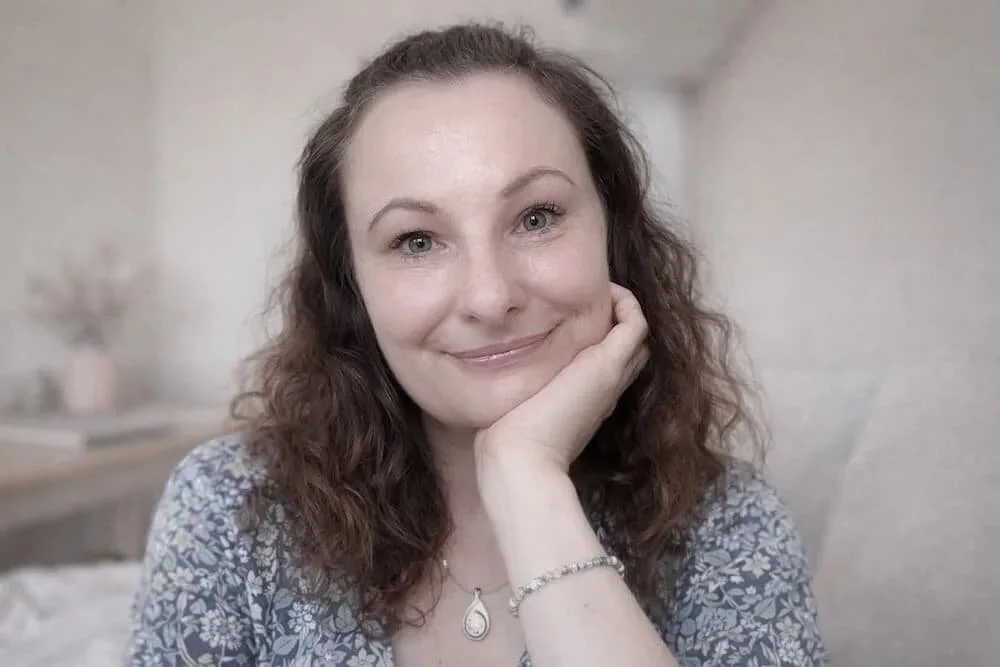
I'm Aleksandra
I'm a BABCP-accredited CBT therapist, EMDR therapist, and registered mental health nurse. I've spent over a decade working in NHS mental health — and I now run this practice specialising in the areas of motherhood that often go unsupported.
Birth trauma. Baby loss. Tokophobia. Pregnancy after loss. Postnatal anxiety, OCD, and depression.
The stuff that gets whispered about in forum threads at midnight but rarely said out loud in a GP surgery.
I use two main therapeutic approaches — CBT (Cognitive Behavioural Therapy) and EMDR (Eye Movement Desensitisation and Reprocessing). Both are recommended by NICE for trauma and anxiety. I'll explain more about how they work further down, but the short version is: CBT helps you understand and change the patterns keeping you stuck. EMDR helps your brain process the memories and experiences that are still running the show — without you having to talk through every detail.
I also draw on Compassion-Focused Therapy and Acceptance and Commitment Therapy where they're useful.
But I don't follow a script. I follow you.
As seen in…

Things You've Probably Already Heard
You might have heard some of these before — from a friend, a midwife, a health visitor, a previous therapist, a well-meaning stranger. They're usually said with kindness, but... they rarely help.
"At least the baby is healthy."
"Everything happens for a reason."
"Have you tried mindfulness?"
“It was a long time ago — maybe it's time to move on."
"You should be grateful."
"Lots of women have difficult births. You just need to focus on the positives."
"What would you say to a friend?"
If any of those made you feel smaller rather than safer — you're not the problem. The support just wasn't right.
What's Different Here
Everything you bring will be held safely and will find a space in the room.
The intrusive thoughts about your baby. The rage at the consultant who didn't listen. The part where you checked for blood fifteen times today. The fact that you googled "am I a psychopath" at 3am because of what your brain keeps showing you. The grief that sits right next to love and won't move.
I've sat with hundreds of women carrying exactly these things. Your feelings are not too much.
Your thoughts are not too dark. Your story is not too complicated or too complex.
Here's what working with me actually looks like:
I'll help what's happening make sense to you.
Not with jargon. With plain language that fits your experience. You'll understand why your brain is doing what it's doing — why the checking, the replaying, the dread, the numbness are all happening. And that understanding is often the first step. Because once you can see the pattern, you can start to change it. Many women tell me that just naming what's going on — having someone say "this is what's happening and this is why" — brings more relief than anything else they've tried.
We'll go at your pace.
If you're not ready to talk about the birth, we don't talk about the birth. If you need to spend three sessions building up to the hard stuff, that's not a waste — that's how trauma therapy works.
I'll be honest.
If something isn't working, I'll say so. If I think you need more sessions or fewer sessions, I'll tell you. If I'm not the right person for what you need, we'll explore what might be a better fit and I'll help you find it.
I'll use what works for you.
CBT when we need to work with the anxious thoughts, the checking, the avoidance patterns. EMDR when there's a memory that's stuck — still raw, still vivid, still hijacking your body as if it's happening now. We'll explore the options together and agree on the best path forward.
I'm a person, not a blank screen.
I'll laugh when something is funny. I'll sit with you when something is devastating. I won't pretend to be neutral when you tell me what happened to you during your birth. You'll feel like you're talking to a human being, because you are.
Why This Became Personal
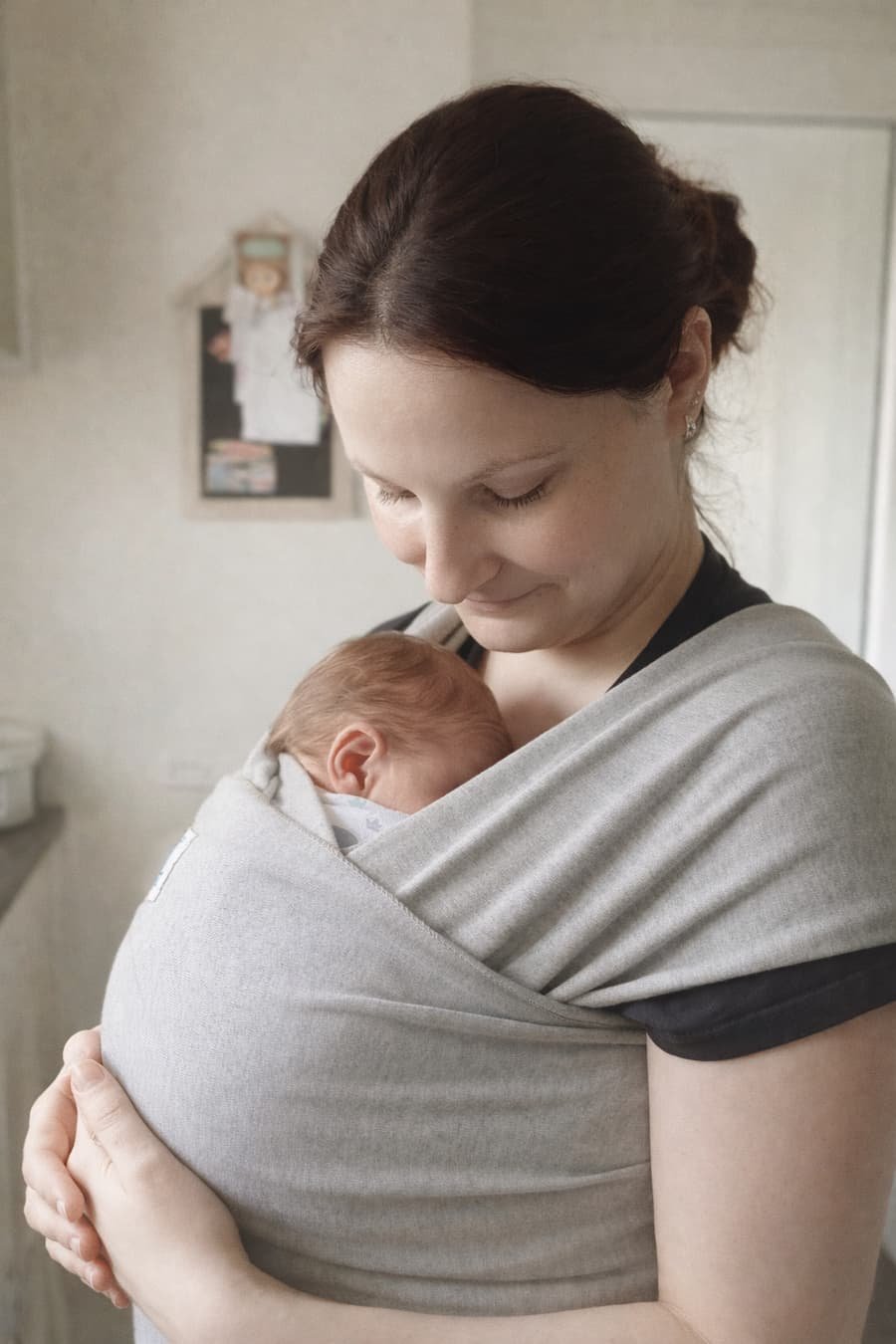
I came to perinatal work through my clinical training. But I stayed because of what happened after I became a mother.
After my first son was born, I experienced birth trauma and severe postnatal depression. I know what it's like to feel broken by an experience everyone else seems to survive just fine.
Before my second baby, I was terrified of giving birth again. I did a lot of inner work — therapy, preparation, healing — and I had a very different birth experience. A healing one. I know that's possible too, because I lived it.
And then, when my second son was three months old, he became seriously unwell. What followed was a period of uncertainty, fear, and grief that I wouldn't wish on anyone. Watching your child go through painful procedures while you stand there unable to fix it. Living in a body that runs on adrenaline and dread. Not knowing what's coming next. Feeling the ground shift permanently under your feet — knowing, somewhere deep down, that you will never be quite the same person you were before.
I did the work. I had therapy. I took medication. And I healed — slowly, with the right support.
I'm not sharing this to make this about me. I'm sharing it because when you sit opposite me and say "you don't understand — my whole world fell apart" — I do. Not your exact story. But the texture of it. The weight of it. The way it changes everything.
You need a therapist who knows what she's doing clinically. I do — my qualifications and decade of NHS experience reflect that. But my own experience gave me something training alone can't teach:
a felt understanding of what it's like to sit in the dark and wonder whether the light is actually there, or whether people are just saying that.
It's there. I've seen it hundreds of times. And I've walked it myself.
Am I the Right Therapist for You?
Therapy works best when there's a good fit. Not every therapist is right for every person, and I'd rather be honest about that upfront.
We're likely a good fit if:
✓ You want regular, consistent support — not a session here and there when things get bad
✓ You want to understand what's driving your distress, not just manage the surface symptoms
✓ You want a therapist who's warm, direct, and present — not distant or clinical
✓ You're open to self-compassion, even if it feels impossible right now
✓ You want a specialist in perinatal mental health, not a generalist who "also does" anxiety
✓ You're ready for therapy that involves trauma processing and reflection, not just tips and tools
We may not be a good fit if:
✗ You're looking for ad hoc, drop-in sessions without regular commitment
✗ You prefer unstructured counselling rather than focused, goal-oriented therapy
✗ You want quick fixes and reassurance rather than deeper work
✗ You want certainty and clear answers from me, rather than support to find your own meaning
✗ You're not comfortable with a therapist who brings warmth and personality into the room
Not sure?
That's completely fine.
Book a free 20-minute call or email me and we'll talk it through. No pressure.
My Training & Credentials
Qualifications
Psychology, MSc (Wroclaw University)
Mental Health Nursing, BSc (Coventry University)
Cognitive Behavioural Therapy, PGDip (Coventry University)
Professional Registrations
● Registered Mental Health Nurse — Nursing and Midwifery Council (NMC)
● Accredited CBT Therapist — British Association for Behavioural & Cognitive Psychotherapies (BABCP)
● Qualified EMDR Therapist, working towards EMDR Accreditation — Member of EMDR Association UK
Selected Relevant Training
𑁍 Clinical Supervision (High Intensity), Birmingham University
𑁍 Introduction to Compassion Focused Therapy, The Compassionate Mind Foundation
𑁍 Trauma-Focused Acceptance and Commitment Therapy, Psychwire
𑁍 The Compassion Focused Approach to Perinatal Mental Health, The Compassionate Mind Foundation
𑁍 Healing and Hope: Working with Trauma and Loss in the Perinatal Period, Bespoke Mental Health
𑁍 How to move forward with loss, grief and PTSD linked to traumatic bereavement with Cognitive Therapy, Bespoke Mental Health
𑁍 Strategies to Help Clients Process Grief and Loss, National Institute for Clinical Applications of Behavioral Medicine (NICAMB)
𑁍 Polyvagal Theory in Action: Creating Safety and Connection with Trauma Clients, Deb Dana
𑁍 The Foundation for Infant Loss Training, Foundation for Infant Loss
A Bit About Me (The Human Stuff)
I'm originally from Poland, but I'm also British — dual citizenship, bicultural household, mixing Polish and British traditions daily. I'm mum to a 6-year-old and a 4-year-old, so my life outside work is full of the mess, noise, joy, and exhaustion that comes with small children. I get it.
When I'm not working, you'll find me by the sea. I could spend every free moment on a pebble beach — the waves, the salt air, that fishy-watery smell. The Peak District and Wales are my other happy places.
I love reading (mostly work-related, because I genuinely love what I do), hiking, and art — often done with my children. I drew the jar you saw earlier on this page. If I wasn't a therapist, I'd probably be a website designer. Quiet, focused, introverted work for one? Yes please.
I share this because I know how difficult it can feel to meet a stranger for the first time. I hope what I've shared makes me feel more like a real person on the other side of the screen — not just letters after a name.
Some things that my Clients have said about working with Me:
Ready to Take the Next Step?
You don't have to have it all figured out before you call. You don't have to know which therapy you need, or whether your situation is "bad enough," or what to say first.
You just have to be willing to unscrew the lid — even a little.
If something on this page felt like it was written for you, it probably was.