


Postnatal Anxiety, OCD & Depression Therapy:
When You're Drowning But Everyone Thinks You're Fine
Specialist CBT and EMDR therapy for women who can't stop checking if baby's breathing, who are having intrusive thoughts that terrify them, or who feel nothing when they look at their baby.
Based in Leicestershire, online therapy available in the UK and EU-wide.
Does This Sound Like You?

𑁍 Can't you stop checking if your baby's breathing every 30 minutes? 𑁍
𑁍 Are you having intrusive thoughts about harming your baby that absolutely terrify you? 𑁍
𑁍 Are you too scared to tell anyone about the thoughts in case they think you're dangerous? 𑁍
𑁍 Do you feel nothing when you look at your baby - just emptiness? 𑁍
𑁍 Are you going through the motions but not feeling connected at all? 𑁍
𑁍 Is your harsh inner critic on repeat telling you you're a terrible mother? 𑁍
𑁍 Are you Googling symptoms at 3am every night trying to find certainty? 𑁍
𑁍 Do you panic about everything AND feel nothing at the same time? 𑁍
𑁍 Does everyone think you should be over the moon but you just feel flat? 𑁍
If you answered YES to any of these, you're not alone.
This is postnatal anxiety, OCD, or depression … and it's treatable.
Why You Need a Therapist Who Understands BOTH Anxiety And Postpartum?
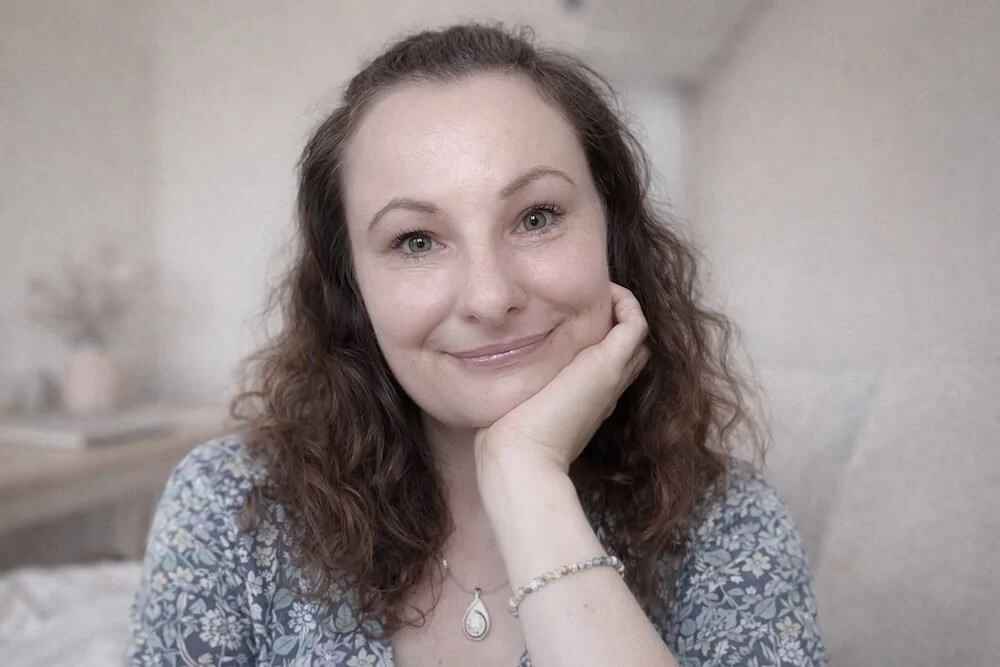
Hi, I am Aleksandra!
I'm a specialist perinatal mental health therapist. I've spent over a decade in NHS mental health services supporting women through intrusive thoughts they're too ashamed to say out loud, crushing postnatal depression, anxiety so severe they can't leave the house, and the "I'm a terrible mother" thoughts that play on repeat.
I'm trained in CBT (BABCP-accredited) and EMDR - evidence-based therapies for anxiety, OCD, depression, and PTSD.
Here's what I've learned:
The intrusive thoughts don't mean you're dangerous.
If you're having thoughts about harming your baby and it terrifies you - that's postnatal OCD, not psychosis. You're not going to act on them. The fact that you're horrified proves you're not dangerous. Nearly 50% of new parents have intrusive thoughts. You're not a monster. You're anxious.
Feeling nothing doesn't mean you're a terrible mother.
If you feel numb, disconnected, like you're looking after someone else's baby - that's postnatal depression. It doesn't mean you don't love your baby. Your brain is protecting you by shutting down. We can help it feel safe enough to reconnect.
This isn't weakness. This isn't failing.
Your body went through massive hormonal shifts, sleep deprivation, 24/7 responsibility for a tiny vulnerable human, loss of your former identity, and societal pressure to be "grateful."
Of course your brain is struggling.
My approach focuses on three things:
✿ Understanding what you're experiencing now (the checking, the intrusive thoughts, the numbness, the harsh inner critic)
✿ Working with what's contributed to this (trauma, unrealistic expectations, lack of support, hormonal crash, sleep deprivation, previous mental health)
✿ Helping you move toward the future you want (sleeping when baby sleeps, feeling connected, not drowning, enjoying your baby, feeling like yourself again)
Why You Are Struggling? (It’s Not Your Fault!)
Postnatal anxiety, OCD, and depression aren't about you being weak or not trying hard enough. They're your nervous system responding to a perfect storm of factors.
What's contributed to where you are now:
The Birth Itself
Maybe your birth was traumatic. Emergency C-section, instrumental delivery, haemorrhage, medical staff dismissing you. You're trying to bond with your baby but you're also processing trauma from how they arrived.
If birth trauma is a significant part of what you're struggling with, you might benefit from our birth trauma therapy page.
Unrealistic expectations
You thought you'd fall in love with your baby instantly. You didn't. You thought breastfeeding would be natural. It's been torture. You thought you'd "just know" what to do. You have no idea. Everyone said "you'll love being a mum" and you... don't. Or at least, not in the way you expected.
The gap between what you expected and reality is devastating.
Lack of Support
Maybe your partner doesn't get it. Your mum keeps saying "I never struggled like this." You're doing this completely alone.
No one told you it would be this hard. And now you're drowning with no help.
Previous Mental Health History
If you had anxiety before pregnancy, it's likely 100 times worse now. If you had depression years ago, it's back. If you had OCD in your 20s, the intrusive thoughts have returned - and they're focused on the baby.
Previous mental health + postnatal period = perfect storm.
Hormonal Crash + Sleep Depravation
Your hormones plummeted after birth. You haven't slept more than 2 hours at a time in weeks. Your body is running on empty.
Sleep deprivation alone can cause anxiety, intrusive thoughts, low mood, poor decision-making. Add hormonal chaos and it's no wonder you're struggling.
Feeding Struggles and Baby Health Issues
If breastfeeding has been traumatic, if you can't breastfeed and feel like you've failed, if every feed is a battle - this contributes massively to postnatal mental health. Feeding struggles = constant stress + guilt + feeling inadequate.
If your baby was in NICU, if they have reflux and scream for hours, if they have colic you can't soothe - you're not just adjusting to motherhood, you're also traumatised and hypervigilant.
Loss of Identity and Societal Pressure
You used to have a successful career, meaningful hobby, driven identity. Now you're "just mum." You don't recognize yourself. You feel like you've disappeared.
This grief is real. And it compounds the anxiety and depression.
Everyone expects you to be grateful. Social media makes it look easy. You're supposed to be "glowing" and "in love."
But you're drowning. And the pressure to pretend you're fine makes it worse.
What Your Brain Learnt:
"I'm not good enough."
"I'm a terrible mother."
"I'm failing at the one thing I'm supposed to be able to do."
"Everyone else can do this - I'm broken."
"My baby deserves better than me."
These beliefs aren't true. But your brain believes them. And that's what we work on in therapy.
What You Want and What is Possible
Therapy for postnatal anxiety, OCD, and depression isn't about "being perfect" or "loving every moment."
It's about not drowning. About feeling okay. About being able to enjoy your baby instead of just surviving.
Right now it may feel like this:
Checking if baby's breathing every 30 minutes
Intrusive thoughts that terrify you
Feeling nothing when you look at your baby
Harsh inner critic on repeat
Can't leave the house
Googling symptoms obsessively
Exhausted but can't sleep
Going through motions but not present

What shifts with therapy:
𑁍 You sleep when baby sleeps. Not check breathing 50 times. Just sleep.
𑁍 The intrusive thoughts still come, but you recognize them as intrusive. You have the thought, you think "that's just an intrusive thought, it doesn't mean anything," and you let it go. You don't spiral.
𑁍 You look at your baby and feel love. Not just obligation. Not just numbness. Actual connection.
𑁍 The "what if" spirals become manageable. You can catch them early, use tools, and get back to the present.
𑁍 You can leave the house with baby. Baby groups don't feel impossible. Coffee with a friend becomes doable.
𑁍 You stop Googling symptoms at 3am. You check baby once, trust they're fine, go back to sleep.
𑁍 The harsh inner critic softens. When you make a mistake, you respond with "I'm doing my best" not "I'm a terrible mother."
𑁍 You feel like yourself again. Not the old you - you've changed. But you recognize yourself. You feel okay.
𑁍 You can actually enjoy your baby. Not Instagram-perfect motherhood. Just moments of genuine joy instead of dread.
How We Work Together
Postnatal therapy for anxiety and depression
three things:
𑁍 Managing what's happening now (the anxiety, intrusive thoughts, numbness, harsh inner critic)
𑁍 Processing what's contributed (trauma, unrealistic expectations, beliefs about not being good enough)
𑁍 Moving toward what you want (connection, feeling okay, not drowning)
What we work on:
Understanding what's happening in your brain
Postnatal anxiety isn't logical. Intrusive thoughts aren't predictions. Depression isn't laziness.
We start by making sense of what's happening. Why you can't "just stop worrying." Why the checking feels compulsive. Why the thoughts keep coming even though you don't want them.
This understanding alone reduces shame.
Managing anxiety spirals BEFORE they take over
CBT helps you catch the "what if" spirals early, use grounding techniques, and get back to the present.
We build practical tools for:
- 3am panic when you can't sleep
- Catastrophic thoughts ("what if baby stops breathing")
- Physical anxiety symptoms (racing heart, tight chest)
- Googling spirals
Working with intrusive thoughts (not pushing them away)
If you're having intrusive thoughts about harming your baby, we work on understanding they're just thoughts, not predictions or desires.
We don't try to "stop" the thoughts (that makes them worse). We change your relationship to them.
Working with the harsh inner critic (self-compassion)
The voice that says "you're a terrible mother," "you're failing," "everyone else can do this" - we work on softening that voice.
Not with toxic positivity ("just think positive!") but with genuine self-compassion. Treating yourself the way you'd treat a friend who's struggling.
Processing underlying trauma or beliefs (EMDR when needed)
If there's trauma contributing (traumatic birth, previous loss, childhood experiences that shaped "I'm not good enough" beliefs), we can process that with EMDR.
EMDR helps your brain reprocess experiences that are "stuck" so they're not driving your present anxiety or depression.
Practical details:
How long: Typically 12–20 sessions, though this varies depending on presentation and complexity. Postnatal OCD and intrusive thoughts often respond well to focused work; depression and identity loss can take longer. We review regularly so you always know where we are.
Format: 50 minutes, online (UK & EU), weekly or fortnightly. Some EMDR processing sessions run to 90 minutes where we agree this is clinically right — charged at £185, always planned in advance, never a surprise.
Cost: £130 per session. I hold a few spaces each month for reduced-cost therapy (£85 per session) for those experiencing financial hardship. Please get in touch to enquire about availability.
You're always in control. We go at your pace.
Frequently Asked Questions
-
No. Intrusive thoughts - even violent or sexual ones - are a symptom of postnatal OCD/anxiety, not a sign you're dangerous.
The fact that the thoughts horrify you proves you're not a risk. If you wanted to harm your baby, you wouldn't be terrified of the thoughts.
I won't call social services. Intrusive thoughts are incredibly common and they're treatable.
The only time I'd need to involve safeguarding is if you had a plan to harm your baby and intended to act on it. That's very different from intrusive thoughts.
-
You're not dangerous. People with intrusive thoughts about harming others almost never act on them.
The thoughts are anxiety, not desires. Your brain is stuck in a "what if" loop trying to protect your baby by catastrophising every possible danger.
This is postnatal OCD. It's anxiety. And it's treatable.
-
If you're struggling to function, feeling numb or disconnected, having scary thoughts about not being here anymore, or can't do basic self-care - this is more than tiredness.
Postnatal depression is real and it's treatable. You don't need to wait for it to get worse.
-
NHS perinatal services or NHS Talking Therapies are excellent but often have 12-week waiting lists and limited session numbers.
Private therapy means:
No waiting list
Longer-term support if needed (not capped at 6-8 sessions)
Flexibility in session frequency
Between-session email support
I work in the NHS alongside private practice, so I understand both systems and can help you navigate them.
-
I hold a few reduced-cost spaces (£85/session) for women experiencing financial hardship. Get in touch to enquire.
Other options:
NHS Talking Therapies (free, but waiting list)
PANDAS UK (peer support, free)
Maternal Mental Health Alliance (resources)
You can also discuss options in the free discovery call.
-
No. You're a mother with postnatal depression.
Feeling numb or disconnected doesn't mean you don't love your baby. It doesn't mean you're broken.
Your brain is protecting you by shutting down. Therapy helps it feel safe enough to reconnect.
Many women who've felt this way go on to bond deeply with their babies once the depression lifts.
-
Yes. Therapy is safe while breastfeeding.
We can work around feeding schedules, and you can take breaks during sessions if needed.
And unless we are doing deep trauma processing, you are welcome to have your baby during the session.
-
If you're struggling to function, if you're having intrusive thoughts that terrify you, if you feel numb or can't leave the house - you're not overreacting.
Postnatal anxiety, OCD, and depression are real conditions. They're not "just" tiredness or hormones.
Your partner might not understand because they're not experiencing it. That doesn't mean it's not real.
-
CBT and EMDR are evidence-based treatments for anxiety, OCD, depression, and trauma. They work for the vast majority of people.
If something isn't working, we adjust. Therapy isn't one-size-fits-all.
We review regularly and if you're not seeing progress, we change approach.
-
If the traumatic birth is the main thing you're struggling with - flashbacks of the birth, can't think about it without reliving it, PTSD symptoms - then yes, birth trauma therapy might be more appropriate.
But if you're mainly struggling with postnatal anxiety, intrusive thoughts, or depression (even if birth trauma contributed), this is the right place.
We can work on both. And we can discuss in the free call which approach makes most sense for you.
-
Yes. Postnatal therapy works alongside medication, NHS perinatal services, health visitors, PANDAS support groups.
I'll collaborate with anyone supporting you.
Haven’t found what you’re looking for?
I’m happy to assist further. Simply complete the contact form, and I’ll be in touch to answer any specific questions or discuss your individual needs.


Ready to Stop Drowning?
You don't have to keep checking if baby's breathing 50 times a night.
You don't have to live in terror of the intrusive thoughts.
You don't have to feel nothing when you look at your baby.
I work with a limited number of clients (2-3 openings monthly) so each gets specialist attention.
Ready to feel like yourself again? Let's talk.
Free, no-pressure. We'll talk through what you're experiencing and I'll explain how I can help.
You don't have to do this alone.

You're not a terrible mother. You're not broken. You're struggling.
And struggling is treatable.
Aleksandra Balazy-Knas
BABCP-Accredited CBT Therapist | Clinical Supervisor | EMDR Therapist
Specialising in postnatal anxiety, OCD, depression, birth trauma, tokophobia
Online therapy UK & EU | Leicestershire
Related: Birth Trauma | Pregnancy After Loss | Tokophobia Therapy
Read more about me and my approach HERE.