


CBT and EMDR Therapy for Birth Trauma
When You Can't Stop Replaying What Happened During Your Birth
Specialist birth trauma counselling and trauma-focused therapy for women processing a traumatic birth — whether your baby is six weeks old or six years old, and whether your birth was an emergency caesarean, an instrumental delivery, a haemorrhage, or simply a room where nobody listened to you.
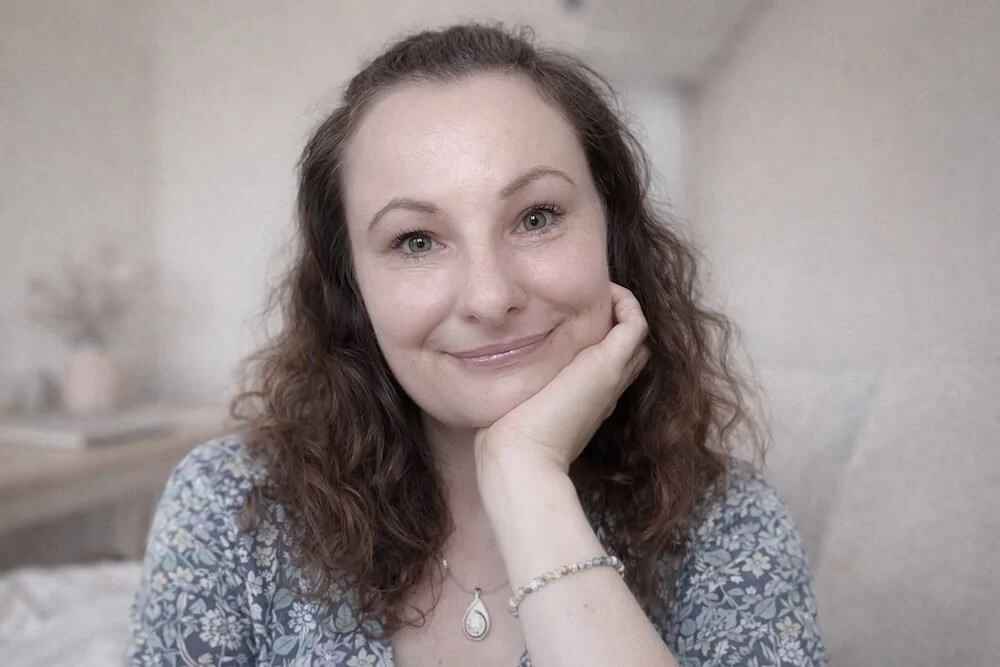
Aleksandra Balazy-Knas
BABCP-Accredited CBT Therapist · EMDR Therapist
Over a decade in NHS mental health. I work with women processing traumatic births — online, across the UK and EU.
Does This Sound Like You?
If your birth was recent
On paper, it all went fine. Everyone keeps telling you how lucky you are.
You're awake at 3am and it isn't the night feeds.
You give the short version when people ask. It was a bit full-on, but we're both fine.
You keep going back to the shift change, when the midwife who actually knew you went home.
You look at your baby and you're not quite there — and the guilt about that is worse than any of it.
You felt sick in the GP waiting room last week, and it was a routine appointment.
You're angry, and there's nowhere to put it, because everyone else has moved on.
If your birth was years ago
Your child is at school. People stopped asking how you were years ago, and you let them stop.
One Born Every Minute comes on and you've turned the telly off before you've decided to.
A friend announces her second and something drops in your stomach that you'd rather she hadn't seen.
Maybe you had a debrief. It helped at the time. It's still there.
You've told yourself other women have been through far worse and you should just be thankful.
Your nervous system hasn't got that memo.
If your baby was in NICU
You held it together the whole time. Everyone kept telling you how strong you were.
Then your baby came home safe, and you fell apart.
The smell of hand gel still does it. So does a buzzer on a door.
You stand over the cot at 3am with your hand near their mouth. You know it's more than you need to do. You do it anyway.
Your baby lived, and other people's didn't. So what right have you got to feel like this?
If you recognised yourself anywhere in this — you're not alone, and you're not overreacting. This is birth trauma. And it's treatable.
What Is Birth Trauma?
(And Why "At Least the Baby's Healthy" Misses It Entirely)
Birth trauma isn't about how your birth looked from the outside. It's about how it felt to you.
Around 30% of women describe their birth as traumatic, and 4–6% go on to develop PTSD afterwards (Ayers, 2017). Many more live with significant trauma symptoms that sit just below that threshold and get no support at all.
Here's the part most people don't understand. Two women can have almost identical births and only one walks away traumatised. The difference isn't what happened on the monitor. It's whether you felt safe, in control, and heard.
On paper, your birth can be completely straightforward and still leave a mark. If nobody explained what was happening. If you were pushed into decisions before you'd had time to think. If you said something was wrong and weren't believed. If you were left exposed, in front of people, and nobody thought to pull a curtain across.
So your birth can look fine to everyone else and not have been fine for you. Both of those are true at once. Yours is the version that counts.
Birth trauma, or postnatal PTSD?
People use both terms, and they overlap. Birth trauma describes the experience — a birth that overwhelmed you. Postnatal PTSD (also called birth-related PTSD, or PTSD after childbirth) is the diagnosis used when what follows reaches a certain level: flashbacks, nightmares, avoiding anything that reminds you, feeling permanently on edge.
You don't need the diagnosis to get help. Plenty of the women I work with sit just below it and are still struggling badly. The treatment is the same either way.
Where Birth Trauma Comes From
Birth trauma rarely comes from one single thing. For the women I work with, it's usually some combination of these.
A medical emergency.
An emergency caesarean where nobody explained anything. A haemorrhage where you could feel yourself fading. A moment you genuinely believed you or your baby might die.
Not being believed.
You said something was wrong. You were told all women feel like this. Ten minutes later something was wrong.
Losing all control.
One intervention leading to the next, faster than you could take any of it in. Things happening to your body before you'd agreed to them. Being told you weren't cooperating when you said you couldn't do it anymore. Feeling unheard and unimportant in a room full of people.
An injury to your baby.
A shoulder that got stuck. Forceps marks that took weeks to fade. A cooling cot. An arm that still isn't moving the way it should. Your baby came home — and the birth is still in front of you every day, in appointments and physio and questions nobody can answer yet.
Separation.
Your baby taken immediately. Waking up not knowing where they were, or whether they were alive. → NICU trauma
A loss you were already carrying.
A previous miscarriage or stillbirth that made this birth feel like a threat from the start. → Pregnancy after loss therapy
Something older that the birth reawakened.
Previous medical trauma. Abuse or assault, where your body wasn't safe and your boundaries weren't respected.
Your brain learned something in that room:
I'm not safe. Nobody will listen if I say something's wrong. I failed.
And your nervous system is still working hard to protect you from something that has already happened.
That's what trauma-focused therapy is for.
Why You Need a Therapist Who Understands BOTH Trauma And Childbirth?
Hi, I am Aleksandra!
I'm a specialist perinatal mental health therapist. I've spent over a decade in NHS mental health services, and I still work in the NHS alongside my private practice — so I've seen from the inside how birth trauma happens. How concerns get dismissed. How women are left traumatised and told to be grateful.
I'm trained in trauma-focused CBT and EMDR — the two treatments NICE recommends for PTSD, and the two with the strongest evidence for birth trauma specifically. I use both.
Here's what I've learned. Your trauma is real even if your baby is physically healthy. Even if other women had it worse. Even if people tell you to move on. You don't have to justify why it was traumatic. If it was traumatic for you, it was traumatic.
"I just wanted to let you know that our baby arrived safely yesterday. I felt so much more in control this time. Everything went smoothly, and the midwives followed the birth plan we wrote together. I couldn't have done this without your support. Thank you for helping me heal." — Recent client
What Shifts With Therapy
Therapy for birth trauma isn't about "getting over it" or "moving on.”
It's about processing what happened so you're not stuck reliving it.
You stop replaying the worst moment. You can think about the birth without being pulled back into it.
You look at your baby and just see your baby. The trauma stops sitting between you.
You can say "my birth was traumatic" out loud without crying or going numb.
The anger stops taking up so much room. You're not carrying it into every conversation. Some women go on to make a complaint. Some don't. Both are fine.
You walk past the hospital. You go to appointments. Your heart rate stays where it should.
You sleep, and when you wake up you're not back in that room.
If your baby was injured during the birth, appointments and physio stop feeling like an ambush. You can be there for your child without being back in that room.
If your baby was in NICU, an alarm becomes just an alarm. You stop checking their breathing every twenty minutes.
And if you want another baby, you can think about it without immediate terror. If fear of the next birth is the biggest thing you're carrying, that has its own name and its own treatment — secondary tokophobia.
How We Work Together
Birth trauma therapy focuses on three things: processing the traumatic birth, managing the symptoms it left behind, and helping you feel like yourself again.
What we work on:
Working with the symptoms (CBT).
The flashbacks, the intrusive images, the nightmares, the triggers — hospitals, medical settings, other people's birth stories. We work on what's taking over your daily life while we prepare to process what's underneath.
Processing the birth itself (EMDR).
EMDR helps your brain reprocess the stuck memory — the moment you thought you were going to die, the pain that was dismissed, the powerlessness — so that it finally moves into the past. You won't need to describe the worst moments over and over. Your nervous system learns: that was then, this is now, I survived it.
Working with the rage and the powerlessness.
The anger at people who dismissed you is valid, and we don't start by telling you to let it go. We look at where it comes from and what you want to do with it.
Working with the guilt.
I should have said something. I should have advocated for myself. Those thoughts are part of the trauma, not the truth about you. We separate what actually happened from what you've been blaming yourself for.
And if you're planning another pregnancy…
…we build a birth preferences plan together — built around what you specifically need to feel safe, not a generic document.
Practical Details
How long does the therapy last?
Typically 12–20 sessions, sometimes more depending on complexity. We review regularly so you always know where we are.
Format
50 minutes, online (UK & EU), weekly or fortnightly. Some EMDR processing sessions run to 90 minutes where we agree this is clinically right — charged at £185, always planned in advance, never a surprise.
Cost
£130 per session. I hold a few spaces per year for reduced-cost therapy (£85 per session) for those experiencing financial hardship. Please get in touch to enquire about availability.
When
You don't need to wait. Six weeks or six years, birth trauma has no expiry date.
You're always in control. We go at your pace.
Q&AYour Questions About Birth Trauma Therapy, Answered
Understanding Birth Trauma
-
People use both words for the same thing, and if you've been searching for birth trauma counselling, you're in the right place. There is a difference though, and for birth trauma it matters. General counselling gives you space to talk about what happened, which many women find genuinely helpful — but talking about a traumatic memory isn't the same as processing it. Trauma-focused CBT and EMDR work directly on the stuck memory itself. That's why women who found counselling supportive but incomplete often notice something shift here that talking alone didn't reach.
-
Most women say some version of that. PTSD gets associated with soldiers and disasters, so it can feel like a word that belongs to somebody else — and that's one of the reasons birth trauma goes unrecognised for so long, or gets mistaken for postnatal depression. If you're having flashbacks or nightmares, or you're steering around anything that reminds you of the birth, that's the same mechanism whatever we call it. You don't need a diagnosis, or a label you feel comfortable with, to start.
-
This is one of the hardest versions of birth trauma, and one of the least talked about. People tell you at least it wasn't worse, or that your child will grow out of it, and you're left holding something you can't put down. Underneath the trauma there's usually guilt — that your body did this, that you agreed to something you shouldn't have, that you didn't push back hard enough. And unlike most trauma, this one doesn't stay in the past: every appointment, every physio session, every milestone that's slower than it should be brings it back. In therapy we work on the memory of the birth and on the guilt separately, because they're two different things. What happened to your baby can't be undone. Carrying it as though you caused it is a different matter.
-
Your baby being healthy doesn't erase what you went through. You can love your baby and be traumatised by their birth. Both are true at once. Birth trauma is real even when your baby is physically fine.
-
Yes. When people dismissed your concerns or made you feel powerless, anger is a reasonable response. Therapy doesn't ask you to get over it — it helps you process what happened so the anger isn't running your life.
-
You're not a bad mum. You're a traumatised mum trying to heal. You're doing the best you can with a nervous system that's still in survival mode, and that isn't your fault.
The Therapy Itself
-
No. You won't be describing the worst moments over and over. Both EMDR and trauma-focused CBT are designed to process trauma without re-traumatising you.
-
We build your capacity to manage distress before we go near the traumatic memory. We go at your pace, and if something feels like too much, we stop. We don't open the trauma up and leave you there.
-
No. If you're struggling, it isn't too soon. Some women process the trauma straight away, some wait years. Both are valid.
-
No. I've worked with women whose births were a decade ago who made some of the biggest shifts, because they finally had language for what they'd been carrying.
-
Yes. We work around feeding, and you can take breaks during sessions.
Getting Support
-
Yes, though what's available varies by area. Your GP can refer you to NHS Talking Therapies for trauma-focused CBT, and some areas have specialist perinatal mental health teams — ask your GP, midwife or health visitor. Many trusts also offer a birth debrief, where you go through your notes with a midwife. A debrief can be really useful for understanding what actually happened. Most women find it answers the questions without shifting the feelings underneath — that's a different piece of work.
-
Yes. Birth trauma therapy works alongside medication, NHS perinatal support, and charities like the Birth Trauma Association or PANDAS. Whether you've had birth trauma counselling before or this is the first time you've asked for support, I'll collaborate with anyone else involved in your care.
Haven’t found what you’re looking for?
I’m happy to assist further. Simply complete the contact form, and I’ll be in touch to answer any specific questions or discuss your individual needs.
let's get startedReady to Stop Being Stuck in That Moment?
You don't have to keep replaying the worst moment.
You don't have to keep looking at your baby and seeing the trauma.
You don't have to carry this on your own, and you don't have to have it all worked out before you get in touch. That's what the conversation is for.
Ready to process what happened so you can be present with your baby? Let's talk.
Free, no-pressure. We'll talk through what you're experiencing and I'll explain how I can help.

Aleksandra Balazy-Knas BABCP-Accredited CBT Therapist | Clinical Supervisor | EMDR Therapist Specialising in birth trauma, tokophobia and pregnancy after loss
Online therapy UK & EU | Leicestershire
Related: Tokophobia | Pregnancy After Loss | Postnatal Anxiety