If your fear of needles or blood is so strong that it's putting you off having a baby — or making pregnancy feel unbearable — you're not being ridiculous, and you're not stuck with it. Blood and needle phobia is a real, recognised condition, and it's one of the most treatable fears there is. This article explains why it happens, why the fainting is different from ordinary anxiety, and how therapy tackles it gently — starting with small steps, not the deep end.
⏱️ Read time: 7 minutes — or jump to what you need most:
When the fear is bigger than the wanting
You want a baby. Or you're already pregnant. And there's a part of this that nobody around you seems to understand — because it isn't the birth exactly, or not only that. It's the needles. The blood tests. The cannula. The drip. The thought of all of it makes your stomach drop and your head go light.
Maybe you've been putting off trying for a baby because of it. Everyone assumes you're just not ready, and you can't bring yourself to explain that the real reason is you don't think you could physically cope with the blood tests. Maybe you're already pregnant and every appointment with "bloods" on it fills the whole week beforehand with dread. Maybe you've fainted before, or been sick, or had to be held while someone tried and failed to find a vein, and the humiliation of that is stitched into the fear now too.
And when you try to talk about it, people laugh it off. "Oh, I hate needles too." As if it's the same thing. As if a quick "ooh, don't like that" is anything like the wall of panic that goes up in you, or the way your body actually shuts down and faints whether you want it to or not.
I want to say this clearly, because you may not have heard it before. What you have is not "being a bit squeamish." It's a recognised phobia — blood-injection-injury phobia — and it affects around 3 to 5 in every 100 people. It is one of the most treatable fears there is. And you do not have to choose between having this fear and having a baby.

Why blood and needle phobia is different
Here's something that will probably make you feel less alone, and less broken: your phobia works differently from every other kind of fear. There's a physical reason you faint, and it isn't weakness.
Most fears do one thing to your body. Your heart speeds up, your blood pressure climbs, and you're ready to run or fight. Blood and needle phobia does something almost unique — it happens in two stages. First your body revs up like any fear: heart rate up, blood pressure up. But then, seconds later, it swings the other way and crashes. Your heart rate drops. Your blood pressure falls away. Not enough blood reaches your brain for a moment — and that's when you feel the room go swimmy, the sweat, the sickness, and then you faint.
That two-stage pattern is why you can be genuinely, physically floored by this in a way someone who's "a bit scared of needles" never is. It has a name — a vasovagal response — and it's automatic. You are not being dramatic. Your body is doing something real, and something you didn't choose. In fact, blood and needle phobia is the only fear where your body's own response can knock you out cold. Around three in four people with it have fainted at some point. So if that's you, you're not unusual — you're textbook.
This matters for two reasons. First, it's why "just calm down and breathe" doesn't fix it — the fainting isn't about how calm you are, it's a reflex, and a different one from ordinary panic. Second, and this is the hopeful bit, there's a specific technique that stops it happening, which most people have never been taught. More on that shortly.
Where it usually comes from
People often assume a fear like this must come from one bad experience. Sometimes it does. Often it's more layered than that — and understanding your own mix is part of what makes it treatable.
For some women, it runs in the family. Blood and needle phobia is one of the most inherited of all the phobias — there's often a parent, a sibling, someone else who goes the same way at the sight of blood. If that's you, it may be that you were simply born with a more sensitive version of that fainting reflex. Nothing happened to "cause" it. Your body just came wired to react strongly, and that's not a flaw or a sign anything is wrong with you. It's biology, and biology can be worked with.
For others, it does trace back to something specific — very often a medical experience, frequently in childhood, where you felt trapped, held down, not listened to, or that something was being done to your body you couldn't stop. A procedure where nobody explained what was happening. A time you were pinned while you screamed. A moment you felt completely powerless in a room full of grown-ups who weren't listening. When that's in the picture, the needle became the thing your body pinned the fear to — but the real root is that older feeling of being out of control and unable to trust the people meant to care for you.
And for many women it's both: an inherited sensitivity that made the reflex easy to trigger, and an experience somewhere along the way that switched it on and taught it to stay.
Here's why all of this matters for getting better. If there's a sensitive reflex, we can settle it directly — there's a technique for exactly that. And if there's a memory feeding it, we can clear that too. You don't have to work out which is which on your own. That's part of what we do together.
Why "just don't look" doesn't work
Everyone offers the same advice. Look away. Don't watch. Distract yourself. Drink some water. Think of something nice.
And you've probably nodded along and tried it, and found it barely touches the sides. Here's why.
"Don't look" assumes the problem is seeing the needle. But for most people with this phobia, that was never really the problem. You can have your eyes shut tight and still feel the panic climbing, still feel your body getting ready to faint, because the fear isn't coming from your eyes. It's coming from the deeper part of you that's braced against being trapped and powerless again. Closing your eyes doesn't reach that part. It's like turning the picture off on a horror film but leaving the sound blaring — you're still right inside it.
So if the tips haven't worked for you, that's not because you're doing them wrong. It's because they're aimed at the surface, and your fear is living underneath.
The bit you're most scared of — and why it's gentler than you think
I want to talk about the part that stops a lot of women even reaching out. Because I think it might be the very thing standing between you and getting better.
You've probably heard that to get over a phobia, you have to face it. And the word for that — exposure — sounds terrifying. It conjures up someone forcing you to stare at needles, or waving one at you, or making you sit through the thing you've spent your whole life avoiding. So you think: I can't do that. I'd rather just keep avoiding it. And you close the tab.
Please let me put your mind at rest, because the reality is nothing like that.
Exposure is not being thrown out of a helicopter into the middle of the ocean and told to swim. That's how nobody learns to swim. It's how people drown. Real exposure is the opposite. It's walking to the edge of the pool together. Sitting on the side. Dipping one toe in. Getting used to that, until it's boring. Then a foot. Then standing in the shallow end. At every step, you're in control, you set the pace, and we don't move on until the step you're on feels genuinely okay.
I would never ask you to look at anything, or do anything, you weren't ready for. We might not go near a real needle for a long time. We start somewhere so gentle it barely registers — maybe just talking about it, or a picture at the far end of the room, or a word on a page. You are in charge of the whole thing. It's a partnership, not something done to you — which matters especially, because being on the receiving end of things done to you without your say is often where the fear came from in the first place.
And here's what surprises women most: when it's done this gently, it works fast. If you're motivated and you do the small steps, most people start noticing a real difference quite quickly. The thing you've dreaded your whole life starts to lose its grip — one small, manageable step at a time.
How therapy actually works for this
Here's the shape of how I work with women on this, so you know what to expect.
We start gently, with CBT — and applied tension. Before we go anywhere near the memories underneath, we bring the fear and the fainting down to something manageable. This is where that specific technique comes in — it's called applied tension, and it's the one thing that actually stops the fainting. You learn to tense the big muscles in your arms, legs and body in a particular way, which keeps your blood pressure up so it can't do its sudden drop. It sounds almost too simple, but it's the evidence-based answer to the one thing that makes this phobia different. Alongside that, we very gradually reduce the avoidance and the safety behaviours, in the gentle, toe-in-the-water way I described. Women are often amazed how quickly this part helps.
Then, when you're ready, EMDR clears whatever's underneath. Once the fear is more manageable, we look at what's actually driving it — and here's something people don't expect. Sometimes what EMDR needs to work on is a memory tied directly to the blood or needles: that childhood procedure, the time you were held down. But often the real charge isn't about needles at all — it's about birth. The frightening birth film they showed at school. The horror stories you absorbed growing up. A birth you witnessed as a child that you were far too young to see. An invasive procedure that had nothing to do with blood but left you feeling violated and powerless. EMDR follows wherever the real charge lives, not wherever we assume it should be. As a qualified EMDR therapist, this is the part I find most rewarding — because when we find and process the memory that's genuinely feeding the fear, it often doesn't just reduce, it lets go in a way that surprises people.
Both CBT and EMDR are recommended by NICE — CBT for specific phobias, and both for trauma. Together, for this particular fear, they're a powerful combination: the CBT and applied tension make the fear manageable and stop the fainting, and the EMDR clears what's underneath so it doesn't keep coming back.
And there's a real reason not to leave this until you're pregnant, or heavily pregnant. Blood and needle phobia is much easier to work on calmly before you're facing a wall of appointments — and untreated, it can genuinely get in the way of care during pregnancy. Doing this work now, before you conceive or early on, means you can walk into those appointments able to cope, rather than dreading every one.
If your fear of birth goes wider than the needles — the pain, the loss of control, the whole idea of it — you might also find these helpful: Tokophobia Treatment: How to Overcome Your Fear of Childbirth and Want a Baby but Terrified of Pregnancy and Birth? You're Not Broken.
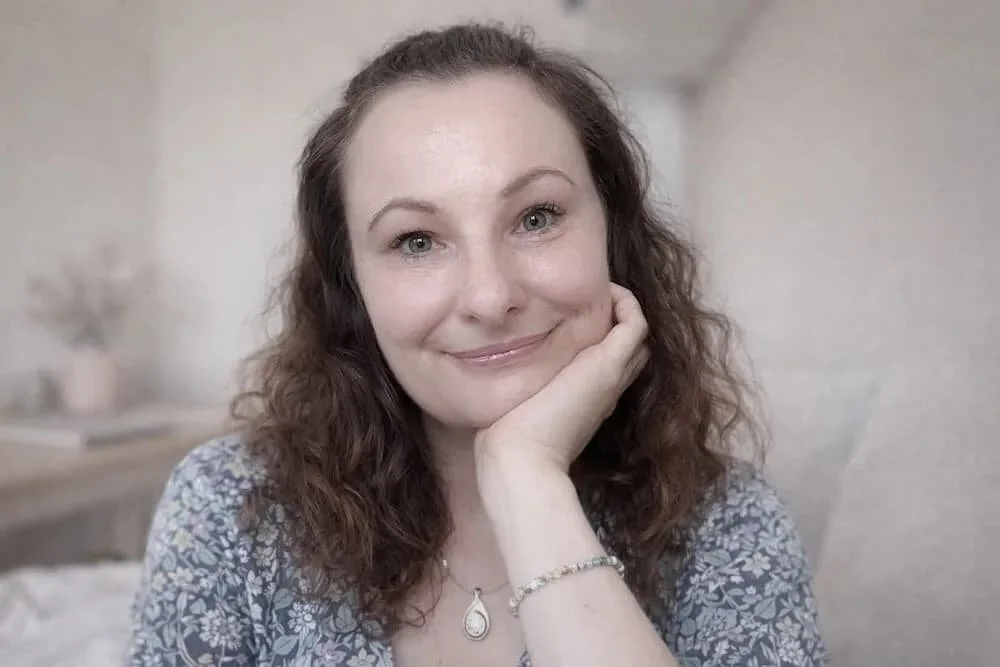
Hi, I’m Aleksandra!
I'm a BABCP-accredited CBT therapist, qualified EMDR therapist, and registered mental health nurse with over ten years of NHS experience, specialising in birth trauma, tokophobia, and pregnancy loss.
I work with women across the UK and EU — including women who did everything they were told to, had the debrief, and still found themselves stuck, wondering what was wrong with them. Nothing was wrong with them. They just hadn't yet had the thing that actually helps.
This fear doesn't have to decide whether you have a baby.
A phobia this strong can feel like a locked door between you and the family you want. It isn't. It's one of the most treatable fears there is — and the way through it is gentler than you're imagining. Small steps. Your pace. A partnership, not something done to you.
If part of you wants to close this tab and keep avoiding it — I understand, avoiding is what this fear teaches you to do. But you don't have to face anything scary just to start a conversation. Reaching out costs you nothing and commits you to nothing.
You can book a free 20-minute conversation— a real conversation about what's been happening and whether the way I work sounds right for you. No pressure and no obligation.
Or email me instead if a call feels like too much right now. Just a few lines about where you are is enough. There's no wrong way to start.
Sessions are £130 • Online across UK and EU • Weekly sessions available
FAQ: Fear of needles and blood when you want a baby
-
Yes — and you're not alone in it, even though it's rarely talked about. Blood and needle phobia is a recognised condition affecting around 3–5% of people, and for some it's severe enough to influence whether they feel able to face pregnancy at all. It's not being dramatic, and it's not a reason to give up on having a baby. It's one of the most treatable fears there is, especially when addressed before or early in pregnancy.
-
Because blood and needle phobia is physically different from other fears. It happens in two stages: your blood pressure briefly rises like any fear, then suddenly crashes — a reflex called a vasovagal response — and that drop is what makes you faint. It's automatic and physical, not a sign of weakness or poor coping. Around three in four people with this phobia have fainted at some point. It also means there's a specific technique (applied tension) that can stop it, which most people are never taught.
-
Yes — it's one of the most inherited of all the phobias, and many people have a parent or sibling who reacts the same way. For some, that means they were simply born with a more sensitive fainting reflex, and nothing "happened" to cause the fear at all. For others it comes from a specific experience, and for many it's a mix of both. None of it is a flaw or a sign that something is wrong with you — and all of it can be treated.
-
Because those tips aim at the surface — the sight of the needle — and for most people the fear lives deeper than that. You can have your eyes shut and still panic and still feel faint, because the fear is coming from a deeper sense of being trapped or powerless, often rooted in an earlier experience. That's why therapy that reaches the root works when tips alone don't.
-
No — absolutely not. Exposure is gradual and completely led by you. We start somewhere so gentle it barely registers, and we never move on until the step you're on feels okay. I'd never ask you to look at or do anything you weren't ready for. Think of it as dipping a toe in the shallow end, not being thrown into deep water. Most women are hugely relieved once they understand how gentle it actually is.
-
Applied tension is a simple, evidence-based technique specifically for blood and needle phobia. You learn to tense the large muscles in your body in a particular way, which keeps your blood pressure up and stops the sudden drop that makes you faint. It's often one of the first things we work on, because it directly tackles the fainting that makes this phobia so distressing.
-
Not necessarily. Sometimes EMDR works on a memory directly tied to needles or blood — a childhood procedure, a time you were held down. But often the memory that's really feeding the fear is about birth instead: a frightening birth film shown at school, scary stories absorbed growing up, witnessing a birth too young, or an invasive procedure that left you feeling powerless. EMDR follows wherever the real charge lives, which is different for everyone — and that's exactly why it works.
-
Often quite quickly, if you're motivated and willing to do the small steps. The gentle CBT and applied tension work tends to bring noticeable change fairly fast, and the EMDR clears the root so the fear doesn't creep back. Everyone's different, but this is genuinely one of the more treatable fears, and many women are surprised how much lighter they feel sooner than they expected.
-
Before, if you can — or as early as possible. Blood and needle phobia is much easier to work on calmly before you're facing lots of appointments, and left untreated it can get in the way of your care during pregnancy. Doing the work now means you can walk into those appointments able to cope rather than dreading every one.
Related Reading:
If your fear of birth goes wider than needles: Tokophobia Treatment: How to Overcome Your Fear of Childbirth
If you want a baby but are terrified of pregnancy and birth: Want a Baby but Terrified of Pregnancy and Birth? You're Not Broken
If you want to understand how EMDR works: EMDR for Birth Trauma: Does It Actually Work?
References & Resources:
Anxiety UK — support and information for phobias, including blood and needle phobia
NHS: Phobias — overview and treatment options
Tommy's: Fear of Childbirth (Tokophobia) — information and support
PANDAS Foundation — perinatal mental health support, helpline 0808 196 5026
NICE NG116 — Post-traumatic stress disorder — clinical guidelines underpinning trauma treatment
EMDR Association UK — about EMDR and the evidence base
If you're struggling to cope, having thoughts of self-harm, or feeling unable to keep going, please reach out to your GP, call Samaritans on 116 123, or go to A&E. You deserve support right now.
Let’s connect:Disclaimer:
The information provided in this article is for educational and informational purposes only. It is not intended to be a substitute for professional medical or mental health advice, diagnosis, or treatment. Always seek the guidance of your healthcare provider, mental health professional, or other qualified health provider with any questions you may have regarding your pregnancy or mental health.