Want a Baby but Terrified of Pregnancy and Birth? You're Not Broken
If you want a baby but the thought of actually being pregnant and giving birth fills you with dread, you're not broken and you're not alone. This is primary tokophobia — an intense fear of childbirth in someone who has never given birth — and it's one of the most isolating and least understood experiences in perinatal mental health. It doesn't mean you don't want to be a mother. It means fear is standing between you and something you want. And it can be worked with — often before you're pregnant at all.
⏱️ Read time: 8 minutes — or jump to what you need most:
You want a baby. You can picture the life. The small shoes by the door, the weight of them asleep on your chest, the family you've always imagined having.
And then your mind goes to the part in the middle — the being pregnant, the giving birth — and something in you slams shut.
Not nervousness. Not "I hope it goes okay." Something bigger than that. A cold, physical dread that makes your chest tighten and your thoughts scatter. The idea of a baby growing inside you, of your body changing, of labour, of the pain, of the loss of control, of something going wrong — it doesn't feel like a manageable worry. It feels unbearable.
So you're stuck. You want to be a mother more than almost anything. And you cannot make yourself take the step that would get you there.
Maybe you've never told anyone how bad it is. Maybe your partner knows you're "not ready" but doesn't understand that it's more than that. Maybe you've been quietly avoiding the conversation, or avoiding sex around the times it might matter, or telling yourself you'll feel differently next year — and next year comes and you don't.
If this is you, I need you to hear something clearly.
This is not you not wanting it enough. This is not immaturity or selfishness or a sign you'd be a bad mother. What you're describing has a name — primary tokophobia — and it's a recognised, understandable fear that responds to the right kind of support. You are not broken. You're frightened. And frightened is workable.

What primary tokophobia actually is
Tokophobia is a severe fear of pregnancy and childbirth — one intense enough to shape major life decisions.
There are two kinds. Secondary tokophobia develops after a traumatic birth or loss — the fear comes from something that already happened. Primary tokophobia is different: it's an intense fear of childbirth in someone who has never given birth (Hofberg & Brockington, 2000). The fear is there before any pregnancy, sometimes stretching back to adolescence or early adulthood.
This is the part that makes it so confusing and so isolating. You don't have a "reason" that other people can see. You haven't been through a traumatic birth. You just know, with a certainty that sits deep in your body, that pregnancy and birth are not safe for you — and no amount of reassurance seems to touch it.
Research suggests fear of childbirth affects up to 14% of women (O'Connell et al., 2017), with a smaller proportion experiencing it at this severe, life-shaping level. And interestingly, newer clinical research suggests primary tokophobia often isn't a simple phobia at all, but something closer to a deeply held, fixed belief that birth is catastrophic — which is exactly why "just think positive" or "look at the statistics" tends to bounce straight off it (Kitamura et al., 2024). The fear isn't sitting at the level of logic. So logic alone can't reach it.
You're not being irrational. You're responding to a belief that feels completely true to you — and the work isn't to argue you out of it, but to help your nervous system genuinely learn something different.
Where the fear comes from when you've never given birth
If you've never been pregnant, you've probably asked yourself: where did this even come from? Why am I like this when nothing has actually happened to me?
There's usually a reason, even if it's not obvious. Primary tokophobia tends to grow from one or more of these roots.
Frightening birth stories — "borrowed" trauma. You absorbed, somewhere along the way, that birth is dangerous and horrifying. Maybe a relative told you their traumatic story in vivid detail. Maybe it was a documentary, a graphic scene in a film, a friend describing everything that went wrong. Your brain filed birth under "catastrophe" based on someone else's experience. This is sometimes called vicarious trauma, and it's a genuine and common root of primary tokophobia.
A fear of losing control. For many women, the deepest fear isn't the pain itself — it's the loss of control. Not knowing what your body will do. Not being able to stop it once it's started. Being at the mercy of a process and a medical system you can't direct. If control is how you've always kept yourself feeling safe, pregnancy and birth can feel like the ultimate threat.
Anxiety that predates all of this. If you've lived with anxiety — generalised anxiety, health anxiety, panic, a tendency to catastrophise — your brain is already primed to scan for danger. Birth, with its genuine uncertainty, becomes the thing your anxiety fixes on and magnifies.
Something from childhood. Sometimes primary tokophobia has roots that go a long way back — an early experience of a medical setting that felt frightening, a message absorbed young that pregnancy is dangerous or shameful, a childhood where your sense of bodily safety was disrupted.
Previous trauma, including sexual trauma. Birth involves the body, vulnerability, exposure, and medical hands in intimate places. For women with a history of sexual trauma or medical trauma, the thought of birth can trigger the same feelings of violation and powerlessness — even if the original trauma had nothing to do with childbirth.
Often it's a combination. And often the "where it came from" isn't fully clear until you start gently unpicking it with someone. What matters is this: the fear came from somewhere real. It's not a character flaw. And because it was learned, it can be worked with.
Why "just get pregnant and you'll be fine" doesn't work
People mean well. They tell you that you'll feel differently once you're pregnant. That your body knows what to do. That women have been doing this forever. That you're overthinking it.
If that worked, you'd have done it already.
Here's the problem with "just get pregnant and you'll be fine." For someone with primary tokophobia, being pregnant isn't the thing that resolves the fear — it's the thing the fear is about. Getting pregnant before the fear is addressed doesn't dissolve it. It often means spending nine months in escalating dread, white-knuckling towards a birth you're terrified of, with the trauma of the fear now compounded by the pressure of a deadline.
There's also a real cost to being refused a real say in how you give birth. Research going back to the earliest work on tokophobia found that women who were denied their choice around birth suffered significantly higher rates of psychological harm afterwards (Hofberg & Brockington, 2000). Being dismissed makes it worse, not better.
"Trust your body" is also a difficult message if part of your fear is precisely that you don't trust your body — or that you've never felt safe in it. Being told to relax and trust can feel like being told the problem is that you're not trying hard enough. You are trying. The fear just isn't the kind of thing that willpower reaches.
This is why the answer isn't to push through. The answer is to actually address the fear — ideally before you're pregnant, while there's no clock running and no pressure, so you can approach trying to conceive from a settled place rather than a frantic one.
The relief-then-dread cycle nobody talks about
There's a particular loop that many women with primary tokophobia get caught in, and almost nobody names it — so if this is you, you may have felt very alone in it.
You decide you're going to try. This is the month. You've talked yourself into it, you want the baby, you're going to do it.
And then some part of you starts to panic. You find reasons to wait. Not this cycle — the timing's off, you're stressed, you'll start properly next month. Or you go through the motions but a quiet part of you is braced the whole time.
And then your period comes. And underneath the disappointment — because you do want this — there's a flood of relief. Not pregnant. Safe for another month. You don't have to face it yet.
And then the relief curdles into guilt. Because what kind of person feels relieved they're not pregnant when they want a baby so badly? What's wrong with you? And the cycle starts again.
If you recognise this, please hear me: the relief is not evidence that you don't want a baby. The relief is your nervous system exhaling because the threat it's terrified of has been postponed. The wanting and the relief are not in conflict about whether you want a child — they're in conflict about whether it feels safe to try. Those are different things, and understanding the difference is the beginning of getting unstuck.
This loop can go on for years. Eighteen months, two years, longer — "trying" without really trying, sabotaging without meaning to, the gap between what you want and what you can make yourself do getting more painful each cycle. It is exhausting. And it is exactly the kind of stuckness that therapy can move.
How therapy helps — before you're even pregnant
Here's what I most want you to know: you don't have to wait until you're pregnant to get help. In fact, for primary tokophobia, doing the work beforehand is often exactly what makes trying feel possible.
Trauma-focused CBT works on the beliefs underneath the fear — "birth will destroy me," "I won't cope," "I'll have no control," "something will go wrong." Not by arguing with you or telling you to think positive, but by examining those beliefs properly, understanding where they came from, and gradually helping your nervous system learn that the catastrophe it's braced for isn't the certainty it feels like. It also works on the avoidance — the not-trying, the not-talking-about-it — that keeps the fear locked in place.
EMDR therapy is often particularly powerful for primary tokophobia, and it's worth explaining why, because it surprises people.
Most people think EMDR is only for processing things that have already happened to you. But EMDR works beautifully for primary tokophobia in two specific ways. First, it can process the "borrowed" trauma — the frightening birth stories, the graphic scenes, the images that got lodged in your nervous system and made birth feel like certain catastrophe. Those absorbed memories can be reprocessed so they lose their grip, even though they never happened to you. Second, EMDR has what's called a future-template protocol — a way of helping your brain mentally rehearse a feared future event, like childbirth, in a new and less threatening way, installing a felt sense of "I can handle this" rather than "this will destroy me."
As a qualified EMDR therapist, this is some of the most rewarding work I do — because women who arrive certain they can never do this often reach a point where trying feels genuinely possible. Not because they've become fearless, but because the fear has stopped running the whole show.
Let me show you what that can look like, because "it's workable" is easy to say and hard to believe when you're the one who's been stuck for years.
One woman I worked with had wanted children for as long as she could remember and had been "trying" for over two years — except she wasn't really, and she knew it. Every month she'd talk herself into it and then find a reason to wait. Every negative test brought a wave of relief she felt sick with guilt about. Her fear had started young, built on a relative's horrific birth story she'd heard as a teenager and never shaken. She was certain she was the exception — that other women could be helped but her fear was too deep, too old, too fixed.
We didn't start with the pregnancy. We started with the fear itself — where it came from, the story that had lodged in her nervous system, the belief underneath it that birth would destroy her. Using EMDR, we reprocessed that borrowed story so it stopped feeling like a prophecy about her own body. We used future-template work to let her brain rehearse a birth she could survive, rather than the catastrophe she'd been bracing for. It wasn't quick, and it wasn't about becoming fearless.
But a few months in, she told me she'd stopped finding reasons to wait. The fear was still there — quieter, more like background weather than a wall. And for the first time in years, trying felt like a decision she was making, not a threat she was running from.
That's what this work does. Not erase the fear. Move it out of the driving seat.
Both trauma-focused CBT and EMDR are therapies recommended by NICE guidelines. And both can be done now — before you conceive, while there's no pressure — so that trying to conceive stops feeling like walking towards something terrifying, and starts feeling like a decision you can actually make.
If you're not sure where you are or what would help most, I've written a fuller overview of treatment here: Tokophobia Treatment: How to Overcome Your Fear of Childbirth.
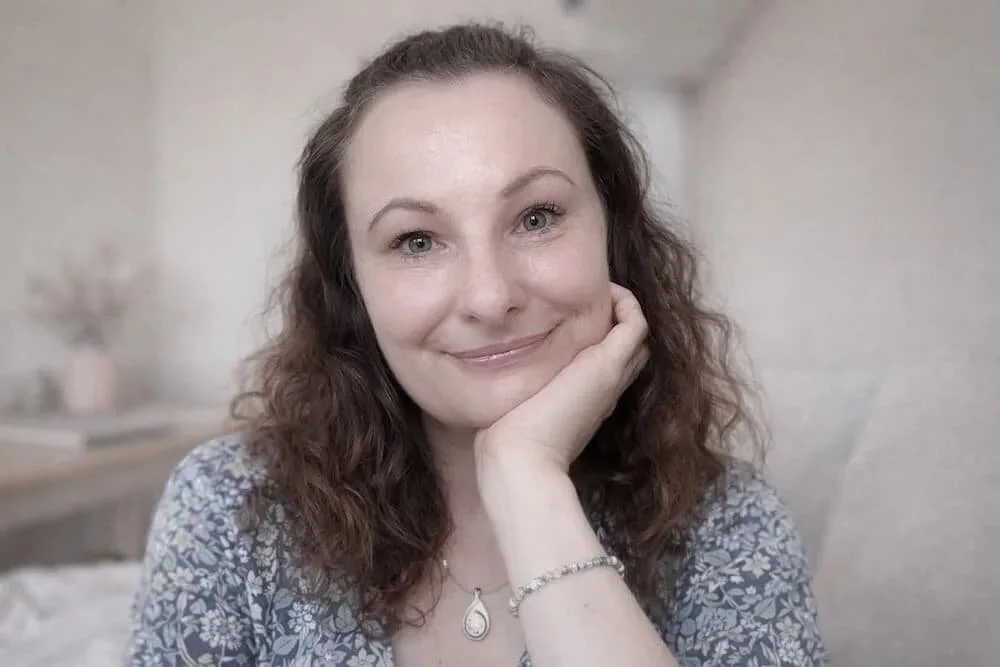
Hi, I’m Aleksandra!
I'm a BABCP-accredited CBT therapist, qualified EMDR therapist, and registered mental health nurse with over ten years of NHS experience, specialising in tokophobia, birth trauma, and pregnancy after loss.
I work with women across the UK, EU and internationally — including women who want a baby desperately but are so frightened of pregnancy and birth that they can't make themselves try. Women caught in the relief-then-dread loop, month after month, feeling like something is wrong with them. There isn't. And you don't have to stay stuck here.
You don't have to choose between your fear and the family you want.
Wanting a baby and being terrified of pregnancy aren't a contradiction — they're the exact tension that defines primary tokophobia. It doesn't mean you shouldn't be a mother. It means there's a fear in the way, and the fear can be worked with.
You don't have to wait until you feel ready to reach out. And reaching out doesn't mean committing to anything — not to a pregnancy, not to a timeline, not to any decision at all. It just means understanding what's driving the fear, with someone who's helped a lot of women exactly here.
That's worth naming, because if part of you has just felt understood by this article and is already planning to close the tab and think about it next month — that's the same pattern that's kept you stuck. The relief of postponing. It applies to booking a call too. But sending one message isn't a step toward the thing you're afraid of. It's just a step toward understanding it. You don't have to have decided anything about a baby to do that.
If any of this has felt like reading your own thoughts — the wanting, the dread, the relief you feel guilty about, the years of not-quite-trying — reach out.
You can book a free 20-minute conversation— a real conversation about what's been happening and whether the way I work sounds right for you. No pressure and no obligation.
Or email me instead if a call feels like too much right now. Just a few lines about where you are is enough. There's no wrong way to start.
Sessions are £130 • Online across UK, EU and internationally • Weekly sessions available
FAQ: Fear of pregnancy when you want a baby
-
Yes — and it's more common than most people realise. This is called primary tokophobia: an intense fear of childbirth in someone who has never given birth. Wanting a baby and fearing pregnancy aren't a contradiction. The fear is about the pregnancy and birth themselves, not about whether you want to be a mother. It's a recognised condition that responds well to therapy, particularly when addressed before you conceive.
-
Primary tokophobia is a severe fear of pregnancy and childbirth in a woman who has never given birth. Unlike secondary tokophobia, which develops after a traumatic birth, primary tokophobia is present beforehand — often from adolescence or early adulthood. It can stem from frightening birth stories, a fear of losing control, existing anxiety, childhood experiences, or previous trauma including sexual trauma.
-
Primary tokophobia usually has roots even when you've never had a traumatic birth yourself. Common sources include absorbing frightening birth stories or graphic media (sometimes called vicarious or "borrowed" trauma), a deep fear of losing control, pre-existing anxiety, difficult early experiences, or previous trauma. The fear came from somewhere real — and because it was learned, it can be worked through.
-
Yes — and it's often the best time to do it. Working through the fear before you conceive means there's no time pressure and no escalating dread of an approaching birth. It allows you to approach trying to conceive from a settled place rather than a frightened one. Many women find that addressing the fear first is exactly what makes trying feel possible at all.
-
Yes. EMDR is often particularly effective for primary tokophobia. It can reprocess "borrowed" trauma from frightening birth stories or graphic media so those images lose their grip, and its future-template protocols help your brain rehearse childbirth in a new, less threatening way — building a felt sense of "I can handle this." As a qualified EMDR therapist, I use it frequently with women who fear birth despite never having experienced it.
-
Because the relief isn't about not wanting a baby — it's your nervous system exhaling because the thing it's terrified of has been postponed for another month. This relief-then-guilt cycle is extremely common in primary tokophobia and it doesn't mean you don't want to be a mother. It means fear is making the decision harder than the wanting alone would. Understanding that difference is often the first step out of the loop.
-
No. Good trauma-focused therapy — including EMDR — doesn't require you to describe or relive your worst fears over and over. You stay in control of the pace throughout. The work is about processing and reducing the fear, not forcing you to sit in it.
-
It varies. Some women feel significantly calmer after a handful of sessions; others, particularly where there's underlying trauma, need longer. Because primary tokophobia can be addressed before pregnancy, there's usually no deadline — you can work at a pace that feels safe. What matters is starting.
References & Resources:
Tommy's: Fear of Childbirth (Tokophobia) — information and support
Birthrights — your rights around choice in childbirth, including if you become pregnant
PANDAS Foundation — perinatal mental health support, helpline 0808 196 5026
Mind: Anxiety and panic attacks — information and support
NICE NG116 — Post-traumatic stress disorder — clinical guidelines underpinning trauma treatment
EMDR Association UK — about EMDR and the evidence base
If you're struggling to cope, having thoughts of self-harm, or feeling unable to keep going, please reach out to your GP, call Samaritans on 116 123, or go to A&E. You deserve support right now.
Let’s connect:Disclaimer:
The information provided in this article is for educational and informational purposes only. It is not intended to be a substitute for professional medical or mental health advice, diagnosis, or treatment. Always seek the guidance of your healthcare provider, mental health professional, or other qualified health provider with any questions you may have regarding your pregnancy or mental health.