

Perinatal Trauma Therapy: When Pregnancy, Birth, or Motherhood Feels Unbearable
Specialist EMDR and CBT therapy for tokophobia, birth trauma, pregnancy after loss, and postnatal anxiety across the UK & EU.
For thoughtful, capable women who are successful in work, relationships, and life - but when it comes to pregnancy, birth, or motherhood, the fear, grief, or trauma feels unbearable.
You don't have to carry this alone.
Does This Sound Like You?…
I specialise in supporting women through the most challenging parts of pregnancy and early motherhood. If any of these sound familiar, you're in the right place.
Are you terrified of giving birth even though you desperately want this baby?
𑁍 You're lying awake at 2am Googling "can you die during childbirth UK."
𑁍 You've drafted the email to your consultant requesting a C-section at least 20 times but can't send it because you're terrified they'll say no.
𑁍 Every baby kick feels like counting down to disaster instead of joy.
Are you checking for blood every single time you go to the toilet?
𑁍 You're pregnant after losing a baby.
𑁍 You're holding your breath through every scan waiting for them to tell you there's no heartbeat.
𑁍 You can't let yourself bond with this baby in case you lose them too.
𑁍 You can't stop waiting for the other shoe to drop.
Can't you stop replaying the moment you thought you were going to die in childbirth?
𑁍 Your birth was traumatic.
𑁍 When you look at your baby, you see the trauma.
𑁍 Everyone expects you to have "moved on" but you're still stuck there.
𑁍You can't walk past the hospital without panic.
𑁍 The rage at medical staff who didn't listen won't go away.
Are you struggling with overwhelming anxiety or depression after having your baby?
𑁍 You thought having the baby would make everything better. Instead, you feel worse.
𑁍 You're exhausted, anxious, can't stop the intrusive thoughts, or you can't bond with your baby the way you "should."
𑁍 You feel like you're failing at the one thing you're supposed to be good at.
If any of these sound familiar, you're not broken. You experienced trauma.
And trauma doesn't respond to "just think positive" or "try to relax." It needs proper support.



As seen in…
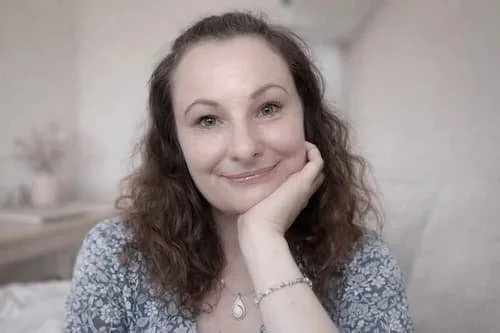
Hi, I’m Aleksandra!

I'm a BABCP-accredited CBT and EMDR therapist specialising in perinatal trauma.
I've spent over a decade in NHS mental health, supporting women through tokophobia, birth trauma, baby loss, and postnatal anxiety. I've walked alongside hundreds of women navigating the terror, the grief, and the overwhelming fear that can come with pregnancy and early motherhood.
I'm trained in EMDR and Trauma-Focused CBT — evidence-based therapies specifically designed for processing trauma and anxiety.
I currently work in the NHS alongside my private practice, so I understand UK maternity care inside and out. I know how to help you advocate for yourself, navigate the system, and get the support you deserve.
Your fear isn't irrational. Your trauma is real. And you don't have to navigate this alone.
What Changes When You Get the Right Support
Right now, pregnancy, birth, or early motherhood might feel overwhelming — like you're just surviving, not living.
Here's what shifts when you work with someone who understands perinatal trauma:
You stop living scan to scan.
The hypervigilance eases. You can breathe through pregnancy without constant terror.
You can think about your birth without being pulled back into it.
The flashbacks decrease. You're no longer stuck reliving the worst moments.
The fear of giving birth becomes manageable.
Not gone completely, but no longer controlling every decision you make.
You feel present with your baby.
The fog lifts. You can actually enjoy moments instead of just going through the motions.
This doesn't happen overnight. It takes work. But it does happen.
You're Not Alone
Over the past decade, I've supported hundreds of women through pregnancy after loss, traumatic births, and fear of childbirth - both in NHS mental health services and, mostly recently, in private practice.
Women who thought they'd never be able to enjoy a pregnancy again
Women who couldn't look at their baby without seeing the trauma
Women who were convinced they couldn't survive giving birth
They're not just "managing" anymore. They're actually living.
And if they can get through this, so can you.
How CBT and EMDR Can Help?
When you're caught in grief, trauma or anxiety, it can feel like your mind and body are running the show - racing thoughts at 3am, panic in your chest at the sound of a monitor, or a constant sense that something bad is about to happen.
I use two evidence-based therapies to help you process trauma and manage overwhelming fear: CBT (Cognitive Behavioural Therapy) and EMDR (Eye Movement Desensitisation and Reprocessing).
They work differently, but they work together. return.
CBT helps you manage what's happening now
CBT focuses on gently untangling the loops - the catastrophic thoughts, the panic spirals, the avoidance - so you don't feel hijacked by them anymore.
What this looks like:
Making sense of what's happening in your mind and body — why you can't "just stop worrying," why your heart races before every scan, why sleep feels impossible.
Calming spirals of "what if" — learning ways to pause the anxious loops so they don't take over your whole day.
Working with triggers — reducing the power of scans, hospital smells, baby kicks, or anything else that sends you into panic.
Finding gentler ways through avoidance — whether that's skipping scans, avoiding baby clothes, or feeling unable to leave the house, therapy gives you small, manageable steps back toward what matters.
Rebuilding confidence and connection — with your body, your baby, and yourself.
EMDR helps you process what happened before
EMDR is a trauma therapy that helps your brain process experiences that are "stuck" - traumatic births, pregnancy losses, medical trauma, or anything else your nervous system is still holding onto.
What this looks like:
Processing traumatic memories — not by reliving every detail, but by helping your brain understand "that was then, this is now."
Reducing flashbacks and intrusive images — the birth scene that replays at 2am, the moment you thought you were going to die, the scan where they told you there was no heartbeat.
Helping your body feel safer — EMDR works with your nervous system, not just your thoughts. Your body learns: "I survived that. I'm safe now."
Separating past trauma from present pregnancy — if you've had a loss or traumatic birth before, EMDR helps you stop catastrophising that it will happen again.
You won't need to describe every traumatic detail. EMDR is designed to process trauma without re-traumatising you.
Together, CBT and EMDR help you:
✓ Process the trauma that's driving the fear (EMDR)
✓ Manage the anxiety that's taking over your daily life (CBT)
✓ Build practical tools for scans, appointments, panic spirals (CBT)
✓ Stop replaying the worst moments (EMDR)
✓ Make decisions from calm, not terror (Both)
This isn't about forcing yourself to "stay positive." It's about processing what happened, managing what's happening now, and creating space for calm, safety and even joy to return.
Gentle Letters from Aleksandra
Insights, guidance, and support for navigating the harder parts of pregnancy and motherhood.




Frequently Asked Questions
-
What makes something traumatic isn't what happened — it's what it did to you. You don't need a dramatic birth story, a medical emergency, or a "reason" that would satisfy someone else. If you're still replaying it, avoiding things because of it, or feeling like you haven't been the same since — that's enough. I work with women whose experiences were dismissed by everyone around them, including medical staff. Being told "at least the baby is healthy" is not a measure of whether you need support. You do not need to justify your distress to access help.
-
Sessions are £130 for 50 minutes, weekly or fortnightly. Most clients work with me for 12–20 sessions, though this varies depending on complexity — some trauma resolves faster, multiple losses or layered experiences take longer. I'll always be honest with you about where we are and what I think you need; you'll never be kept in therapy longer than is helpful. A small number of reduced-fee spaces (£85 per session) are available for those experiencing genuine financial hardship — please ask when we speak.
-
CBT (Cognitive Behavioural Therapy) works with the thoughts, beliefs, and behaviours that are keeping you stuck — the anxiety spirals, the avoidance, the hypervigilance. EMDR (Eye Movement Desensitisation and Reprocessing) works directly with traumatic memories that feel frozen in time — the flashbacks, the intrusive images, the body's alarm response that won't switch off. Most of my clients end up using both at different points. You don't need to arrive knowing which you need — that's my job. What matters is that I'm trained in both, so we're not limited to one tool.
-
Yes, absolutely. Many of my clients aren't pregnant at all. Birth trauma, tokophobia, and grief from pregnancy loss don't wait for a positive test to become a problem — and they don't resolve on their own with time. Whether you're still processing something that happened years ago, trying to decide if you want to try for another baby, or terrified at the idea of ever being pregnant, there is a place for you here. You don't need to be pregnant to deserve support.
-
Possibly, yes — and here's why. Most therapists are generalists. If you've had CBT or counselling before with someone who wasn't trained in trauma, or who wasn't familiar with perinatal experience specifically, it may not have reached the right thing. General therapy often helps people cope better; trauma therapy helps people process what happened so they no longer need to cope with it in the same way. I work exclusively in this area. I understand what it's like to sit with someone who finally gets the specific texture of this kind of fear and grief — not just anxiety in the abstract. If previous therapy felt like talking around the problem rather than through it, that's worth exploring.
-
This is one of the most common fears people bring to a first call, and it's a completely understandable one. Trauma therapy — done properly — is not about being pushed to relive everything until you break. We spend time at the beginning building your capacity to tolerate difficult emotions before we move into any processing work. You are always in control of the pace. If something feels too much, we slow down or stop. EMDR in particular is designed so that you don't have to describe every detail of what happened — your brain can process a memory without you having to narrate it out loud. Falling apart is not part of the plan. Feeling things is — but safely, at a pace that works for you.
What Clients Say
"I feel at peace with those experiences. I accept that they've happened and that they were challenging and painful, but I now also recognise that they don't need to affect my experience of motherhood."
- Anonymous client, Birth TraumaTherapy
"I just had to message you - I couldn't wait to tell you about my scan! It actually worked - the plan we put together really helped. I managed it fine. And then relief; the results came back low risk!
I won't lie, I have been panicking a bit since, but I feel like I'm handling it better. Just wanted to say thank you because for the first time, I felt like I could actually get through a scan without it completely breaking me."
— Client message (shared with consent)
"The most helpful part of therapy was realising and accepting that the miscarriage was not my fault. I keep reminding myself that I did all I could.
I used to think “It is my fault, whose else's fault could it be?.” But now, when I piece things together, I know I did all I could."
- Anonymous client, Pregnancy After Loss Therapy


let's get startedReady to Start?
You don't have to navigate this alone.
Therapy sessions are £130 for 50 minutes.
I hold a few spaces per year for reduced-cost therapy (£85 per session) for those experiencing financial hardship.
I work with a limited number of clients at a time so each woman gets the specialist attention and support she deserves.
Book your free 20-minute discovery call to discuss what you're experiencing and how I can help.
The discovery call is free, no-pressure, and helps us both understand if we're a good fit.