


Tokophobia Therapy: When the Fear of Childbirth Feels Unbearable
Specialist CBT and EMDR trauma-focused therapy for women whose fear of pregnancy or birth is stopping them from trying for the baby they desperately want — or making their current pregnancy unbearable instead of joyful.
Based in Leicestershire, available online across the UK and EU.
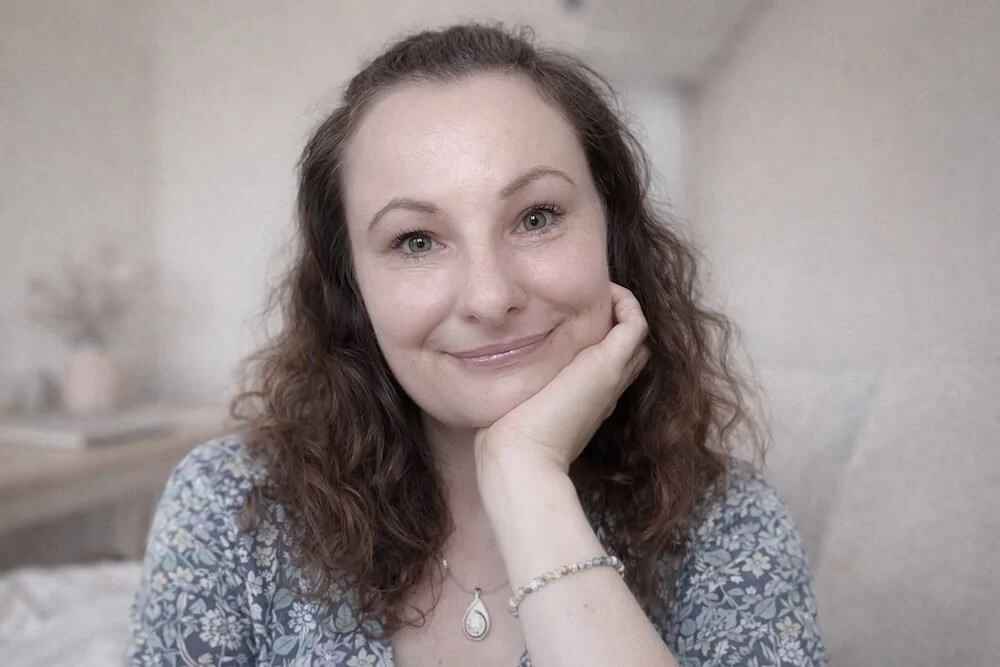
Aleksandra Balazy-Knas
BABCP-Accredited CBT Therapist · EMDR Therapist
Over a decade in NHS perinatal mental health. I work with women who are terrified of pregnancy or birth — online, across the UK and EU.
Does This Sound Like You?
If you're not pregnant yet:
Do you desperately want children but feel too terrified to get pregnant?
Is it the pregnancy itself that frightens you — your body changing, being unwell, nine months you can't stop once it's begun?
Do you lie awake at 2am Googling "can you die during childbirth UK," absorbing every worst-case scenario?
Do you search for stories of women who had their first baby at your age — and then, the same evening, search for reassurance that it's completely fine not to have children at all?
Do you feel secretly relieved when pregnancy tests are negative — even though you want a baby more than anything?
Have you been pregnant before and lost the baby, and find yourself checking the odds of it happening again?
Do you feel broken — like everyone else can do this except you?
If you're pregnant now:
Have you drafted the email to your consultant requesting a C-section at least 20 times but can't bring yourself to send it?
Are you pregnant again after a traumatic birth — and does every kick feel like counting down to disaster instead of meeting your baby?
Are you avoiding prenatal appointments because walking into that hospital triggers flashbacks?
Are you terrified medical staff will dismiss your fear or make you justify why you're "too scared"?
Do you feel broken — like everyone else can do this except you?
If you answered YES to any of these, you're not alone. And you're not overreacting.
This is tokophobia … and it's treatable.
What Is Tokophobia? (And Why It's Not "Just" Pregnancy Anxiety)
Tokophobia is an intense, overwhelming fear of pregnancy and childbirth that goes far beyond typical nervousness. While most pregnant women feel some anxiety about labour, tokophobia is different. It's a phobic-level fear that can dominate your thoughts, interfere with your daily life, and make the idea of giving birth feel absolutely unbearable.
Up to 14% of pregnant women experience significant fear of childbirth (O'Connell et al., 2017), and around 2–6% develop severe tokophobia that interferes with daily life. Roughly one in three women describe their birth as traumatic (Ayers et al., 2024).
These numbers tell us one thing clearly: if you're struggling with intense fear around birth, you're not broken or weak. You're having a very human response to something that, for you, feels genuinely unsafe.
Primary and secondary tokophobia
Tokophobia is usually described in two forms. Primary means you've never given birth, and the fear has been there regardless — sometimes since long before you thought about children. Secondary means you've been through birth before, and the fear comes from what happened: a traumatic birth, or one that ended in loss.
We'll work out which one fits your story in the first session, and it shapes where we start.
When the Fear Isn't About Birth — It's About Getting Pregnant at All
If you're already pregnant and it's the birth itself you're dreading, skip this section — the page picks up again for you just below.

Not everyone with tokophobia is picturing a delivery room. For some women, the fear arrives much earlier — at the thought of being pregnant at all.
If that's you, it might look like this.
The decision resets every month.
This cycle, you tell yourself. This is the month. Then your period arrives and relief floods through you — followed almost immediately by guilt, because you want this, and being relieved feels like proof something is wrong with you. Then it starts again. Sometimes for years.
Sometimes it isn't the birth — it's the pregnancy.
For some women, the delivery room isn't even the frightening part. It's the nine months before it. Your body changing in ways you can't stop or predict. Being sick, possibly for months. Being examined, measured, handled. Having something happening inside you that you can't pause, can't undo, and can't get out of once it's begun.
And you are searching in both directions.
Women who had their first baby at your age, and how it went for them. Then, the same evening, essays by women who chose not to have children and are happy. You're looking for permission — and whichever kind you find, the other half of you argues straight back.
You're not indecisive and you're not ungrateful. You're caught between two things you can't reconcile, and thinking your way through hasn't worked — because it was never a thinking problem.
This is treatable.
We work on what's actually driving the fear rather than trying to argue you into a decision. Once the fear loosens, the choice becomes clearer — and it becomes yours again, made from calm rather than from exhaustion.
Where Does Tokophobia Come From?
Tokophobia doesn't come from nowhere. Your brain learned to fear pregnancy and childbirth.
For most women I work with, the fear is rooted in unprocessed trauma — experiences that taught your nervous system: "My body isn't safe. Birth is dangerous."
A birth that went wrong. An emergency C-section no one explained. Pain you begged for help with and were told you were doing fine. A midwife who didn't believe you. Your nervous system remembers, and now it's telling you: we barely survived that. → Birth trauma therapy
A pregnancy that ended in loss. Miscarriage, TFMR, stillbirth. Labour you went through knowing your baby had already died. How do you trust your body with this again? → Pregnancy after loss therapy
A pregnancy that made you ill. Hyperemesis. Months of your body feeling like it was working against you.
Medical trauma or abuse. A procedure that hurt far more than "just a pinch." Sexual assault or other form of abuse, where your body wasn't safe and your boundaries weren't respected. Losing control is the part that feels unbearable.
What you grew up hearing. Your mum's birth story. Your sister's emergency section. Childbirth is the worst pain imaginable. You absorbed it long before it was ever your turn.
Anxiety, OCD, or emetophobia you've always had. Health anxiety that has now settled on childbirth. Intrusive thoughts about dying in labour. The thought of vomiting through it.
Or nothing you can point to. Sometimes there's no clear event — just terror when you think about it. That's still valid, and you don't need to know where it came from to heal it.
Your fear isn't your fault. Your brain is trying to protect you.
The problem is that the protection — avoiding, catastrophising, bracing — is now costing you the thing you actually want.
That's what trauma-focused therapy is for.
Why You Need a Therapist Who Understands BOTH Anxiety And Childbirth To Overcome Tokophobia?
Hi, I am Aleksandra!
I'm a specialist perinatal mental health therapist. I help women overcome the fear of childbirth — whether you've had a traumatic birth before or you've never given birth but the thought fills you with terror.
I've spent over a decade in NHS mental health, walking alongside hundreds of women with this exact fear. I'm trained in EMDR and Trauma-Focused CBT.
I currently work in the NHS alongside my private practice, so I understand UK maternity care — NICE guidelines for C-sections, how to advocate for yourself, what your rights are.
Your fear of childbirth isn't irrational. It's coming from somewhere.
This is a trauma response. And trauma responses can be healed.
What You Want and What is Possible
Treatment for tokophobia isn't about making you "love" birth or convincing you to have a vaginal birth.
It's about processing the fear so you can make decisions from calm, not terror.

What shifts with therapy:
If you're not pregnant yet:
You can think about pregnancy and birth without your whole body going into panic. Still nervous — that's normal — but not terror.
You sleep. When the 2am thoughts arrive, you have something to do with them other than open your phone.
The searching stops. Not because you finally found the answer, but because you no longer need certainty before you can move.
The decision stops resetting every month. You can hold it long enough to actually make it.
A negative test brings disappointment instead of relief — and the guilt that came with the relief goes too.
If you decide to try, you go into it from choice, not from bracing yourself.
If you've lost a baby before, you can hold what happened then apart from what might happen now.
If you're pregnant now:
You sleep through the night. When anxious thoughts come, you have tools to manage them.
You can think about birth without full-body panic. You still feel nervous, but it isn't consuming terror.
You feel your baby kick and feel connection, not countdown. You can imagine meeting them.
You tell people you're pregnant without crying. You go to scans without feeling sick for a week beforehand.
You prepare the nursery. You imagine holding your baby.
You advocate confidently for the birth you need — C-section, medicated vaginal birth, whatever feels right.
If you've had a traumatic birth before, you can separate "that birth" from "this birth."
If you want a C-section now and still want one after therapy, that's fine. The difference is that you’re making this choice from the place of confidence, not fear.
⭐ "After my first traumatic birth, I was terrified of getting pregnant again. I avoided even thinking about it for years. Working with you helped me process what happened and prepare for birth in a completely different way. When our second baby arrived, I felt so much more in control. Everything went smoothly, and the midwives followed the birth plan we wrote together. I couldn't have done this without your support."
Client who completed therapy for secondary tokophobia
How We Work Together To Overcome Fear of Pregnancy and Childbirth
Tokophobia therapy focuses on three things:
If you're not pregnant yet:
Processing what taught your body that pregnancy or birth means danger
Managing the fear that's running your daily life right now
Reaching a point where the decision is yours again — made from calm, not from panic or exhaustion
If you're pregnant now:
Processing the past trauma that taught your brain birth = danger
Managing the present fear taking over your life
Preparing for this birth in a way that feels empowering
What we work on:
Understanding where your fear comes from
We map your specific story. What happened? What did your nervous system learn?
Processing trauma with EMDR
EMDR helps your brain process experiences that are "stuck." If your fear comes from traumatic birth, loss, medical trauma, abuse, HG — EMDR helps your nervous system understand: "That was then. This is now."
You won't need to relive every detail. EMDR is designed to process trauma without re-traumatising you.
Working with catastrophic thoughts (CBT)
We work on thoughts that feel like facts: "I'm going to die," "I can't survive this," “I will be out of control,” “I will be ignored”
Not by showing you statistics (you've Googled those). But by helping your nervous system feel safer, challenging catastrophic predictions, building tolerance for uncertainty.
Building your anxiety toolkit
Grounding, breathing, ways to interrupt panic. Tools for scans and appointments if you're pregnant — and for the 2am spirals, the two-week waits, and the days the decision feels impossible if you're not.
Birth planning, when you get there
Planning the birth you feel safest having — C-section, medicated vaginal, consultant-led, home birth. This comes when it's relevant; if you're not pregnant, we don't start here.
What about hypnobirthing, breathwork, and relaxation?
Many women find hypnobirthing, guided imagery, breathwork, and grounding techniques genuinely helpful — and I'll often build them into our work together. They give you something to reach for in the moments panic arrives.
But they work best alongside psychological therapy, not instead of it. If the fear is rooted in unprocessed trauma, relaxation techniques manage the symptom without touching the cause. We deal with the cause first, then build the toolkit.
Practical Details
How long does the therapy last?
Typically 12–20 sessions, sometimes more. This varies depending on whether the fear is linked to a previous trauma, a loss, or has been present since before any pregnancy. We review regularly so you always know where we are.
Format
50 minutes, online (UK & EU), weekly or fortnightly. Some EMDR processing sessions run to 90 minutes where we agree this is clinically right — charged at £185, always planned in advance, never a surprise.
Cost
£130 per session. I hold a few spaces per year for reduced-cost therapy (£85 per session) for those experiencing financial hardship. Please get in touch to enquire about availability.
You're always in control. We go at your pace.
Q&AYour Questions About Tokophobia Therapy, Answered
Understanding tokophobia
-
Most people feel some nerves about birth — that's ordinary. Tokophobia is different in degree and in kind: an extreme fear that shapes your daily life, your relationships, and your decisions. You might avoid pregnancy altogether, struggle with intrusive thoughts, have panic attacks, or feel trapped if you're already pregnant. If the fear is interfering with your life, it's worth getting support.
-
Not quite. Tokophobia is fear of a future birth — it can exist before you've ever been pregnant. Birth trauma is a PTSD-type response after a distressing birth. They overlap: secondary tokophobia often develops after traumatic birth, because your body has learned that birth means danger. Both respond well to trauma-focused therapy.
-
Yes. Some women feel fairly calm early on and find the fear building as the due date approaches. Others feel panic the moment they see a positive test. It can emerge at any stage — and the earlier you get support, the more time you have to build tools without a deadline pressing on you.
-
Sometimes — especially if the birth goes well and you feel supported throughout. But it doesn't reliably resolve on its own. Some women go on to develop PTSD symptoms after birth. If you experienced tokophobia during pregnancy, postnatal support helps you process what happened rather than carrying it forward.
-
Yes. I adapt the therapy to work alongside whatever else is going on. If your tokophobia is tied to OCD — intrusive thoughts, contamination fears — or to health anxiety and catastrophising, we work on the fear of birth and on the underlying pattern that keeps feeding it. Treating one without the other tends not to hold.
-
Not necessarily. Triggers can still show up afterwards — appointments, certain bodily sensations, anything that echoes the birth. Some women carry on for a few sessions to process what happened and settle into early parenthood. If anxiety is the bigger picture by then, my postnatal anxiety therapy page may fit better.
The therapy itself
-
Yes. I work with women who've had traumatic births and women who've never given birth but are terrified.
Whether your fear comes from medical trauma, anxiety, abuse, stories, or unknown origin — therapy helps.
-
No. Even in late pregnancy, therapy can help you manage the panic, build practical tools for the weeks ahead, and advocate for the birth you feel safest having. You don't need months for this to be worth starting — some women notice a shift within a few sessions.
-
No. The goal isn't changing your mind about C-section. If you start wanting one and finish wanting one — that's fine. The difference is you'll advocate confidently, not desperately.
Your birth, your choice.
-
No. You won't be describing the worst moments over and over. EMDR and trauma-focused CBT are designed to process what happened without re-traumatising you. Your pace, your control.
-
No. I work with many women whose tokophobia is rooted in abuse, assault, or medical trauma. You don't need to share details you're not ready to share, and we can work on the fear without you reliving what happened. This is a safe, non-judgemental space.
-
Very common, and it makes complete sense — the thought of talking about the fear can feel as frightening as the fear itself. We don't start by diving into your worst memories. We start by building safety and tools. You set the pace, always. A free 20-minute call is a low-stakes way to find out whether this feels safe enough to try.
-
Tokophobia is one of the most treatable perinatal presentations when you work with someone who specialises in it. That said, if we're a few sessions in and not seeing progress, we'll reassess the approach together — or I'll help you find a therapist who might be a better fit. You won't be left sitting in therapy that isn't working.
Getting support
-
Yes, though what's available varies a lot by area. If you tell your midwife or GP about the fear, they can refer you on. You may be asked to complete a screening tool first — usually the WDEQ-A (Wijma Delivery Expectancy Questionnaire) or the FOBS (Fear of Birth Scale).
Depending on where you live, that referral might go to a specialist mental health midwife, a perinatal psychologist or CBT therapist trained in birth trauma, NHS Talking Therapies for mild to moderate anxiety, or a specialist perinatal mental health team for more severe cases. Your care should also include a proper discussion of your birth preferences and all your options, including elective caesarean where that's right for your mental health.
The standards your care should meet are set out in NICE NG192, and in regional frameworks such as the Greater Manchester and Eastern Cheshire Tokophobia Pathway or the NHS Wales Perinatal Mental Health Guideline. All of them emphasise early identification, specialist referral, and trauma-informed care — so if you're being told to just wait and see, that isn't what the guidance says.
If you're struggling to get support locally, or you'd rather not wait, you can book a free 20-minute call with me directly.
-
Be direct. Something like: "I'm experiencing severe fear about giving birth and it's affecting my daily life. I think this might be tokophobia and I'd like support." Your midwife should take that seriously and refer you on. If you feel dismissed, speak to your GP, contact perinatal mental health services yourself, or seek private therapy.
-
Under NICE guidelines, if you have severe fear of childbirth that persists after support, you should be offered a planned caesarean. You'll need to request it through your consultant — and not every consultant understands tokophobia or takes it seriously. I can help you understand your rights, prepare for that conversation, and ask for what you need confidently rather than desperately.
-
Sometimes, particularly where severe anxiety or depression sits alongside the fear. Certain medications are safe in pregnancy and can work well alongside therapy. That's a conversation for your GP or a perinatal psychiatrist — but it doesn't have to be either/or.
-
I hear this more often than you'd think, and it's a sign of how overwhelming the fear has become — not that you don't want your baby. If you're at this point, therapy is urgent, and I can usually offer an appointment quickly. We'd work first on bringing the panic down far enough for you to think clearly, then look at all your options, including a planned caesarean. The aim is that you make the decision, rather than the fear making it for you. Support, not judgement.
-
I hold a few spaces each year for reduced-cost therapy (£85 per session) for those experiencing financial hardship. Please get in touch to enquire about availability.
Haven’t found what you’re looking for?
I’m happy to assist further. Simply complete the contact form, and I’ll be in touch to answer any specific questions or discuss your individual needs.


let's get startedReady to Stop Living in the Fear?
You don't have to keep catastrophising in the middle of the night.
You don't have to keep avoiding trying because birth terrifies you.
You don't have to let fear make decisions.
I work with limited clients (2-3 openings monthly) so each gets specialist attention.
Ready to work through fear so you choose from calm? Let's talk.
Free, no-pressure. We'll talk through what you're experiencing and I'll explain how I can help.
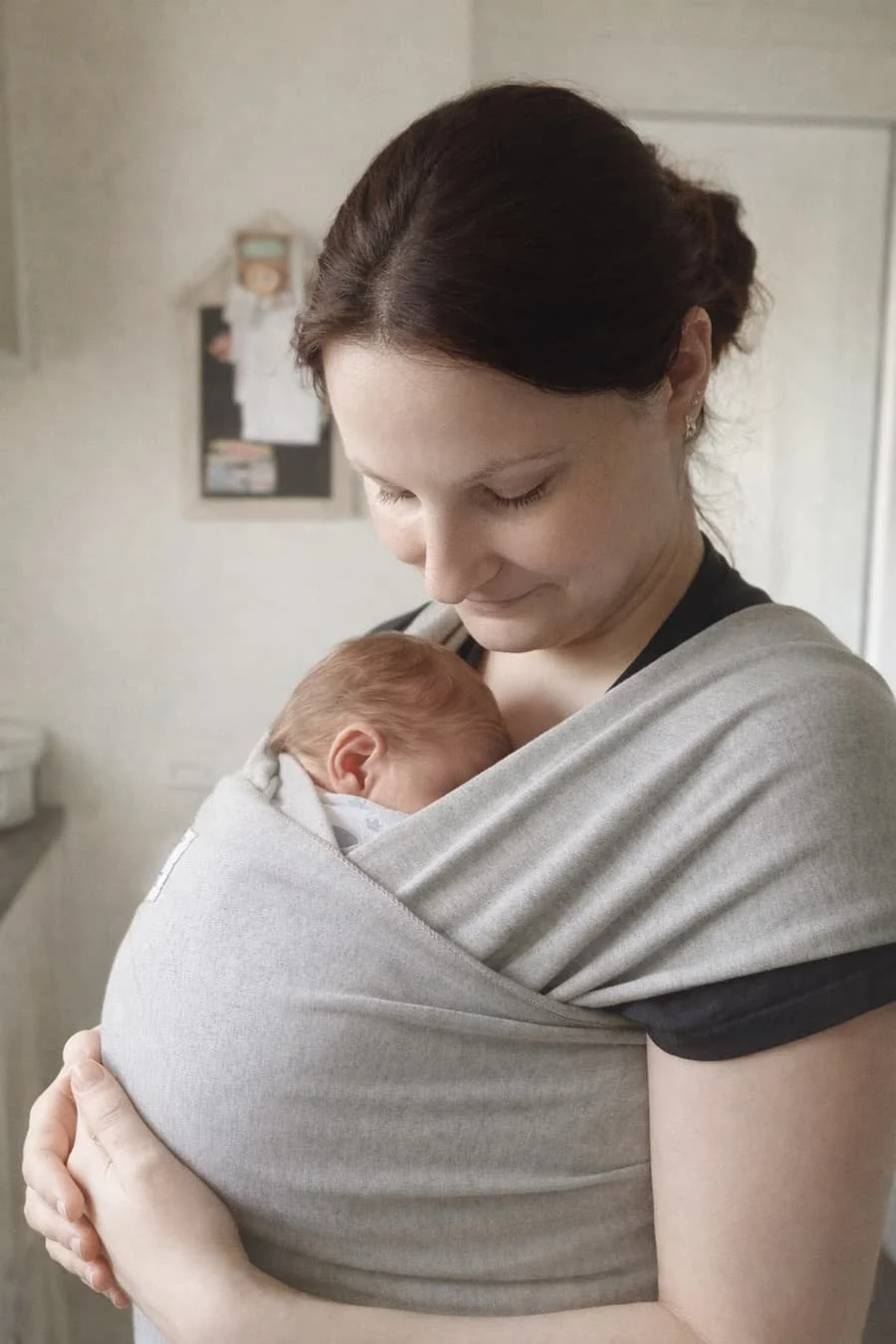
Whether traumatic birth before or first baby, pregnant or avoiding trying, fear from trauma or unknown origin — support is available.
And it works.
Aleksandra Balazy-Knas
BABCP-Accredited CBT Therapist | Clinical Supervisor | EMDR Therapist
Specialising in tokophobia, birth trauma, pregnancy after loss
Online therapy UK & EU | Leicestershire
Related: Birth Trauma | Pregnancy After Loss | Postnatal Anxiety
Read more about me and my approach HERE.