If you’ve never been pregnant but the thought of pregnancy and birth fills you with dread, the thing underneath it often isn’t pain — it’s uncertainty. Nine months, and a birth, that you cannot predict or control. Our brains treat uncertainty as danger, so we try to control it: we research, we read, we scan for reassurance. And it never quite works. This article explains why pregnancy is the one uncertainty you can’t control your way through, where the fear really comes from, and how it can be worked with — often before you conceive.
⏱️ Read time: 7 minutes — or jump to what you need most:
It’s not the pain — it’s not knowing
Yes. No. Maybe.
People assume that if you’re scared of pregnancy and birth, you must be scared of the pain. And maybe the pain is part of it. But if you’re honest with yourself, that’s usually not the thing at the centre.
The thing at the centre is the not knowing.
Nine months where you can’t know how it will go. A body that will do things you can’t predict or direct. A birth that could turn out a hundred different ways, and no way to know in advance which one you’ll get. You can’t see how it ends. You can’t guarantee anything. And that — the sheer unknowing of it — is what makes something in you slam shut.
If you’ve read other things about tokophobia and they kept going on about pain relief and birth plans and none of it landed, this might be why. Your fear isn’t really living in the pain. It’s living in the uncertainty — in the fact that pregnancy and birth ask you to walk into a long, unpredictable unknown with no way to control how it turns out. And for some of us, that’s the most frightening thing there is.
Why your brain treats uncertainty as danger
Here’s something worth understanding, because it takes the shame out of it: your brain is built to hate uncertainty.
Not-knowing, to the oldest part of your brain, is not neutral. It reads as danger. If you can’t predict what’s coming, you can’t prepare for it, and if you can’t prepare, you might not be safe. So uncertainty sets off the same alarm as an actual threat — even when nothing is actually wrong. That’s not a flaw in you. It’s how human brains are wired. We are, as a species, genuinely bad at tolerating not-knowing.
And pregnancy is almost pure uncertainty. You can’t know if it will be smooth or hard. You can’t know how your body will cope. You can’t know how the birth will go. On top of that — and this matters — there is a real unknown here. Pregnancy and birth do carry genuine stakes. This isn’t your brain inventing a danger out of nothing; it’s your brain reacting, very loudly, to a situation where the uncertainty is real.
So when you feel that cold dread at the thought of being pregnant, you’re not overreacting. You’re a human being whose threat system has correctly noticed that pregnancy is a long stretch of the one thing brains find hardest to bear: not being able to know.

The controlling that never works
Here’s what we do when uncertainty feels unbearable: we try to control it.
Because if you can’t stop the uncertainty, maybe you can at least get on top of it. So you research. You read everything. You educate yourself on every complication, every statistic, every possible outcome. You go on the forums. You read the birth stories. You speak to people. You gather information like armour, telling yourself that if you just know enough, you’ll feel safe.
And it doesn’t work. It can’t. Because the thing you’re trying to resolve — the not-knowing — can’t be resolved by reading. There is no amount of information that makes pregnancy certain. So every forum thread, every statistic, every worst-case story you read doesn’t settle you; it gives your anxiety more material. You go looking for reassurance and come back with more to be frightened of.
This is the cruel trap of it. The controlling feels like it should help — it’s the thing that’s always helped you feel safe before. But with pregnancy, the harder you try to control the uncertainty, the bigger and more detailed the fear gets. You’re trying to think your way to certainty about something that is, by its nature, uncertain. And the trying is quietly feeding the very thing you’re trying to escape.
The pregnant woman you can’t stop watching
This is where it shows up in everyday life, in moments other people would never notice.
You see a pregnant woman and you can’t look away — scanning her, wondering how is she doing that, how is she so calm, I could never. A friend mentions, in passing, that she had a UTI in pregnancy, or terrible indigestion, or couldn’t sleep — and while she’s just chatting, you’re silently thinking I don’t think I could cope with that. What if that was me? Someone announces they’re pregnant and, underneath the “congratulations,” something in you tightens.
And then there’s the other side of it. The not-watching. You scroll past the pregnancy posts. You don’t watch the birth scenes. You change the subject when people talk about it. You stay away from anything that might set the fear off, because it’s easier not to look.
Both of these — the obsessive watching and the careful avoiding — are the same thing. They’re both attempts to manage an uncertainty you can’t manage. One tries to control it by gathering information; the other tries to control it by shutting the information out. Neither works, because the uncertainty is still there either way. If you recognise yourself in both at different times, that’s not you being inconsistent. It’s you doing everything a frightened, uncertainty-hating brain knows how to do.
Where it really comes from (it’s not what most people think)
If you’ve never been pregnant, you’ve almost certainly asked: why am I like this? Nothing’s even happened to me.
Most people — and a lot of articles — will tell you it comes from being exposed to frightening birth experiences. A relative’s horror story. A graphic documentary. Witnessing a difficult birth. And that’s partly true. For some women there genuinely is a borrowed story or a frightening thing they saw, and it plays a part.
But in my experience, that’s rarely the whole of it — and often it’s not even the main thing. Because plenty of women have heard scary birth stories and don’t develop this. So what makes the difference?
What actually keeps the fear going, for so many women, is an older pattern — the moments in your life when you felt out of control, in the grip of uncertainty, and it frightened you. And if you look back, you’ll often find this isn’t the first time the pattern has shown up.
It may have appeared when you were a child, in a home or a situation that felt unpredictable. It may have shown up changing schools — that lurch of not knowing what was coming, who you’d be, whether you’d be okay. Starting a new job. The beginning or ending of a relationship. Each of those was a moment of real uncertainty and lost control, and you got through it the only way you knew how: by gripping tighter, by trying to control what you could, by bracing.
Pregnancy is simply the next one in that line — and the biggest. It’s another huge uncertainty, except this time there’s a real stake and a real unknown, and the strategies that got you through all the earlier ones — the planning, the researching, the controlling — genuinely don’t work on it. You can’t plan your way to certainty about pregnancy. And when the strategy that’s always kept you safe stops working, the fear has nowhere to go but up.
That’s the thread worth following. Not just “did you hear a scary story,” but “where in your life did you first learn that not being in control wasn’t safe?”. Because that’s usually where this really lives — and it’s exactly the kind of thing that can be worked with.
When it’s about your body changing
For some women, the uncertainty lands hardest on the body itself.
The idea of your body changing in ways you can’t direct — swelling, shifting, becoming unfamiliar, no longer feeling like yours — is its own version of the unknown. You don’t know what it will feel like, what it will become, whether you’ll still recognise yourself. If feeling in control of your body has always been how you’ve felt steady, pregnancy can feel like nine months of not knowing what your own body is going to do. That’s a real and common root, and it deserves naming.
A gentle word here. If your fear of your body changing is tangled up with a difficult relationship with eating, food, or how you see your body — something that’s been hard for a long time — that deserves proper, specialist support in its own right, and it’s worth mentioning to whoever you talk to. It doesn’t make you any less welcome here, and it doesn’t make the tokophobia any less real. It just means there may be more than one thread worth caring for — and you deserve care for all of them.
How this is worked with
Here’s the genuinely hopeful part. A fear rooted in uncertainty and control is very workable — because it usually traces back to specific, nameable moments, which gives us something real to work with rather than a vague cloud.
EMDR is often especially powerful here, and it’s the part of this work I find most moving. If your fear grew out of earlier moments where you felt out of control and unsafe, those experiences are usually still “live” — still quietly feeding the fear now. As a qualified EMDR therapist, I help your brain reprocess those moments so they settle into the past where they belong. When the old “uncertainty equals danger” alarm stops firing so loudly, the fear of pregnancy and birth often loosens, because the thing underneath it has finally been dealt with. EMDR can also help your brain rehearse a feared future — like being pregnant, like giving birth — in a calmer, more grounded way, building a felt sense of “I could handle not knowing” where there used to be only dread.
Trauma-focused CBT works alongside it on the beliefs the fear has built — “if I’m not in control, something terrible will happen,” “I have to know everything or I won’t cope,” “uncertainty means disaster” — and gently loosens their grip. A big part of this work is learning to tolerate not-knowing: not by forcing yourself to stop caring, but by slowly teaching your nervous system that uncertainty, while uncomfortable, isn’t the same as danger. That’s a genuinely learnable skill, and it changes far more than how you feel about birth.
Both are recommended by NICE. And both can be done now — before you’re pregnant, with no clock running — which is often exactly what makes trying feel possible.
One more thing worth saying, because it matters for this fear specifically. The work is never something done to you. You set the pace. You stay in control throughout. For a woman whose fear is precisely about uncertainty and lost control, that matters enormously — therapy isn’t another place where control is taken from you. It’s a place where you stay in the driving seat while you work, gently, on the very thing that frightens you.
If you want the bigger picture of primary tokophobia — the wanting-a-baby-but-frightened side of it — here’s the full guide: Want a Baby but Terrified of Pregnancy and Birth? You’re Not Broken. And you can read about how I work with this at Tokophobia Therapy.
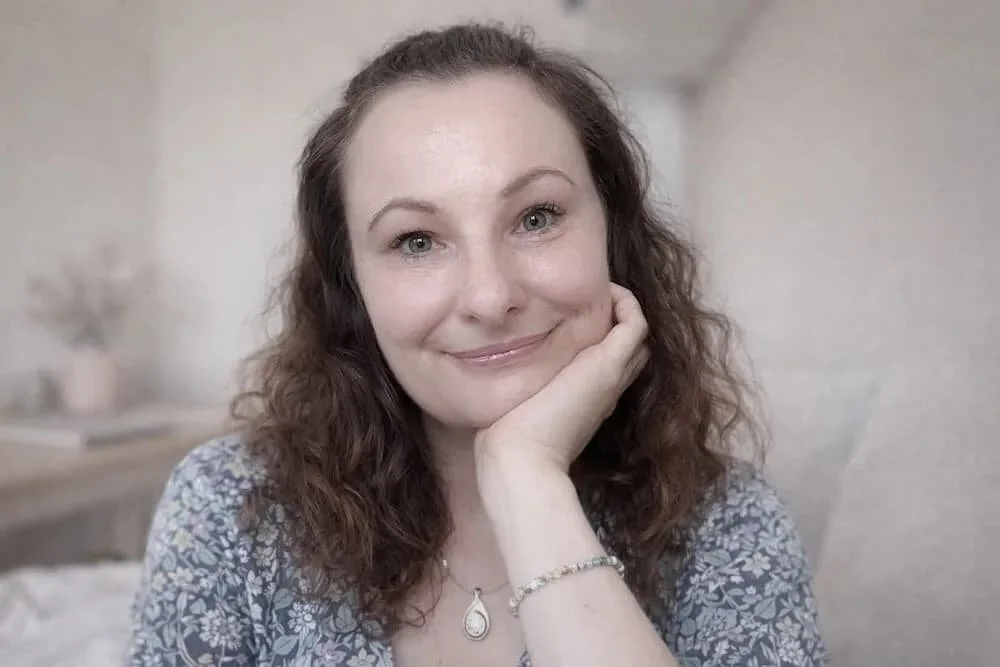
Hi, I’m Aleksandra!
I'm a BABCP-accredited CBT therapist and a member of EMDR Association UK, working towards accreditation. I specialise in tokophobia, birth trauma, and perinatal anxiety.
A lot of the women I work with are the capable, organised ones — the planners, the researchers, the ones who’ve always coped by staying on top of things. They’re often the most surprised to find themselves this frightened of pregnancy. There’s nothing wrong with them, or with you. Pregnancy is simply the one thing you can’t plan or control your way through — and learning to meet that uncertainty differently is exactly the work that helps.
Ready to talk?
A fear of uncertainty can feel like a locked door between you and the family you want. It isn’t. It’s a learned response — a pattern that’s been with you a long time — and patterns can change, especially when you go to where they came from rather than just trying to push through.
You don’t have to wait until you feel ready. And reaching out doesn’t mean committing to anything — not a pregnancy, not a timeline, not a single decision. It just means understanding what’s driving the fear, with someone who works with this all the time. You stay in control of every step, including this one.
If any of this has felt like reading your own mind — the researching, the watching, the quiet dread, the sense that you’ve felt this way before in other parts of your life — reach out.
I offer online therapy across the UK and the EU. Sessions are £130, with weekly appointments available. You can book a free 20-minute conversation or email me. Getting in touch doesn't commit you to anything.
FAQ: Fear of pregnancy and uncertainty
-
Because the fear usually isn’t really about birth itself — it’s about uncertainty, and not being able to control how it will go. Pregnancy and birth are a long stretch of the unknown, and our brains treat uncertainty as danger. For many women this fear traces back to earlier moments in life where they felt out of control, and pregnancy is simply the biggest version of that pattern. It’s a learned response, not a flaw — and it can be worked with.
-
Very normal. For a lot of women with tokophobia, pain is a minor part — the real dread is the uncertainty: not knowing how the pregnancy will go, how your body will cope, how the birth will turn out. If general advice about pain relief has never reassured you, this is often why. Naming that it’s about uncertainty is frequently the first thing that makes the fear make sense.
-
Because you’re trying to resolve uncertainty, and uncertainty can’t be resolved by information. There’s no amount of reading that makes pregnancy certain — so instead of settling you, every forum thread and statistic gives your anxiety more to work with. The controlling feels like it should help, but with pregnancy it quietly feeds the fear. Learning to tolerate not-knowing, rather than trying to eliminate it, is a big part of what actually helps.
-
Yes — this is extremely common, and often more important than frightening birth stories. Moments earlier in life where you felt out of control and uncertain — a difficult childhood, changing schools, a job, a relationship — can teach your nervous system that not being in control isn’t safe. Pregnancy then becomes the next, biggest version of that. Therapy like EMDR can process those earlier experiences, which is often what loosens the fear of pregnancy and birth.
-
Partly, for some women — a borrowed story or a difficult birth they witnessed can play a role. But it’s rarely the whole picture, and often not the main driver. Plenty of people hear frightening birth stories without developing tokophobia. What tends to keep the fear going is an older pattern of feeling out of control in the face of uncertainty. That’s usually where the deeper work is.
-
Yes — and it’s often the best time. Working on the fear before you conceive means no time pressure and no approaching birth to dread, so you can go at your own pace. Many women find that addressing the uncertainty and control pattern beforehand is exactly what makes trying for a baby feel possible at all.
-
No — and this matters especially for this fear. Good therapy is never done to you. You set the pace and stay in charge throughout. For someone whose fear is about uncertainty and lost control, therapy is one of the few places you get to stay fully in the driving seat while you work on the very thing that frightens you.
Related Reading:
The full guide to primary tokophobia: Want a Baby but Terrified of Pregnancy and Birth? You’re Not Broken
An overview of treatment: Tokophobia Treatment: How to Overcome Your Fear of Childbirth
If you’re caught in the trying-to-conceive loop: The Two-Week Wait When You’re Scared of Birth
If you want to understand how EMDR works: EMDR for Birth Trauma: Does It Actually Work?
References & Resources:
Tommy's: Fear of Childbirth (Tokophobia) — information and support
Mind: Anxiety and panic attacks — information and support
PANDAS Foundation — perinatal mental health support, helpline 0808 196 5026
NICE NG116 — Post-traumatic stress disorder — clinical guidelines underpinning trauma treatment
EMDR Association UK — about EMDR and the evidence base
If your fear is tied to a history of difficulty with eating or how you see your body, Beat (0808 801 0677) offers specialist support. And if you're struggling to cope, having thoughts of self-harm, or feeling unable to keep going, please reach out to your GP, call Samaritans on 116 123, or go to A&E. You deserve support right now.
Let’s connect:Disclaimer:
The information provided in this article is for educational and informational purposes only. It is not intended to be a substitute for professional medical or mental health advice, diagnosis, or treatment. Always seek the guidance of your healthcare provider, mental health professional, or other qualified health provider with any questions you may have regarding your pregnancy or mental health.