Too Terrified to Give Birth Second Time? Understanding Secondary Tokophobia After Traumatic Birth
⏱️ Quick Read (3 minutes)
If you're pregnant again after a traumatic first birth, you might be:
Lying awake at night with panic attacks about labour
Avoiding antenatal appointments because even talking about birth triggers you
Considering a caesarean not for medical reasons, but because you can't face vaginal birth again
Feeling guilty for not being excited about this pregnancy
Wondering if you made a mistake getting pregnant when you're this terrified
This article gives you:
Validation that your fear is trauma, not "just anxiety"
Understanding of what secondary tokophobia actually is (14% of pregnant women experience it)
Evidence-based therapy approaches that work (trauma-focused CBT & EMDR)
Practical tools for coping right now
A clear path to getting professional help before your due date
Not ready to read 2,400 words? Jump to what you need most:
You're lying awake at night, one hand on your growing bump, the other clenched into a fist. You wanted this baby. You chose this baby. But every time you think about giving birth again, your chest tightens and panic floods through you.
"I can't do this again."
The thought loops endlessly. Your first birth left scars—not just physical ones, but the kind that replay in your mind when you're trying to sleep. The feeling of being out of control. The pain that felt unbearable. The moment when you knew something was wrong but no one listened. The hours that felt like days.
Now you're pregnant again, and instead of excitement, there's dread. Instead of planning the nursery, you're planning how to avoid what feels inevitable.
If this is you, what you're experiencing has a name: secondary tokophobia - an intense, overwhelming fear of childbirth that develops after a traumatic birth experience.
And here's what no one else will tell you: this isn't just anxiety about labour. It's grief. Grief for the birth you deserved the first time. Anger at not being listened to. Rage at what was done to you or what happened to you. Fear that history will repeat itself.
Your anxiety is the tip of the iceberg. Beneath it lies a trauma that needs addressing, not just managing.
What Is Secondary Tokophobia?
Secondary tokophobia is more common than primary tokophobia (fear of birth before ever giving birth). Research indicates that approximately 14% of pregnant women worldwide experience tokophobia, with secondary tokophobia affecting those who have previously given birth and experienced trauma.
Unlike general birth anxiety—which most pregnant women experience to some degree—secondary tokophobia is characterised by:
Intrusive thoughts about your previous birth that you can't switch off
Physical panic symptoms when thinking about labour (racing heart, difficulty breathing, feeling sick)
Avoidance behaviours such as not attending antenatal appointments, avoiding conversations about birth, or using multiple forms of contraception despite wanting children
Sleep disturbances including nightmares about giving birth again
Requesting a caesarean section primarily driven by fear rather than medical necessity
Considering termination of a wanted pregnancy due to terror of giving birth
Women describe it as feeling trapped - pregnant with a baby you desperately want but terrified of the only way that baby can arrive.

The Real Searches You're Making at 3am
When I work with mothers experiencing secondary tokophobia, they tell me what they've been Googling in the middle of the night:
"Scared to give birth again after traumatic first birth"
"Terrified of labour second time"
"Can I have a c-section because I'm too frightened?"
"Will I get PTSD again?"
"How to cope with fear of giving birth"
"I want another baby but can't face labour"
You're searching for reassurance. For someone to tell you it will be different this time. For permission to feel this terrified even though you "should" be grateful to be pregnant.
Here's that permission: your fear is valid. What happened to you mattered. And you deserve support to process it.
What Secondary Tokophobia Really Is (That No One Tells You)
Most articles will tell you secondary tokophobia is "fear of repeating a traumatic experience." That's true but incomplete.
In my work as a trauma-focused CBT and EMDR therapist-in-training specialising in perinatal mental health, I see secondary tokophobia as fundamentally about unprocessed trauma and unacknowledged grief.
The anxiety you feel? It's your body's alarm system saying: "We're not safe. Remember what happened last time."
But underneath that alarm, there's often:
Grief for:
The birth experience you deserved but didn't get
The immediate bonding moments that were stolen from you
The feeling of safety in your own body that was violated
The excitement about pregnancy that's now replaced with dread
The version of yourself before birth trauma
Anger about:
Not being listened to when you said something was wrong
Interventions that happened without your true consent
Medical professionals who dismissed your pain or concerns
People telling you "at least you have a healthy baby" as if your trauma doesn't matter
Beliefs you might be carrying:
"I failed"
"My body let me down"
"I should have done something differently"
"I'm a bad mother for being scared"
"No one will believe me if I say I'm not coping"
These aren't irrational thoughts. They're how your brain made sense of a traumatic experience where you felt powerless.
Does Secondary Tokophobia Mean You Have PTSD?
Not always, but often the two overlap.
Around 3-6% of women develop full PTSD after childbirth, but many more experience trauma symptoms without meeting full diagnostic criteria. With secondary tokophobia, approximately half of affected women show features consistent with birth-related PTSD.
Signs that your tokophobia might involve PTSD include:
Intrusive re-experiencing: Flashbacks or vivid memories of your traumatic birth that feel like they're happening now
Avoidance: Actively avoiding reminders of the birth (places, conversations, even touching your body in certain ways)
Hypervigilance: Feeling constantly on edge, easily startled, difficulty sleeping
Negative thoughts and mood: Persistent beliefs like "I failed," blame towards yourself, emotional numbness
Whether it's tokophobia alone or tokophobia with PTSD, the treatment approach I use addresses the trauma at its root.
How I Work With Secondary Tokophobia: Beyond "Just Relax"
When mothers come to me terrified about giving birth again, we don't start with breathing exercises or positive affirmations. We start by acknowledging what happened to you and how that's living in your body and mind right now.
When you work with me, here's what actually changes:
✿ You'll be able to think about your first birth without being flooded. The memory will still be there — but it will feel like something that happened, not something still happening to you right now. You'll be able to tell the story without your heart racing, without your body going into panic, without losing the next three hours to intrusive thoughts.
✿ That voice that says "I failed," "I should have done something differently," "my body let me down" — we work on that together until it loses its grip. Most women find it starts to be replaced by something much closer to the truth: you did everything you could in an impossible situation, with the information and support you had at the time.
✿ You'll have real tools for when panic hits at 2am, or when a midwife appointment sends you spiralling. Not just "breathe through it" — actual techniques that work when your nervous system is in overdrive and you need to come back to the present quickly.
✿ You'll be able to go to antenatal appointments without dread building for days beforehand. To talk about birth with your midwife or consultant without shutting down or leaving the appointment feeling worse than when you arrived.
✿ You'll have words for what you need — and the confidence to say them. Whether that's to your medical team, your partner, or yourself. Many women come to me feeling completely voiceless about their care. They leave knowing exactly how to advocate for themselves and feeling safe doing it.
✿ And perhaps most importantly: you'll be able to feel something other than terror about the birth ahead. Not necessarily excitement — that might take time, and that's okay. But something closer to "I can do this" than "I can't survive this."
We'll work together on:
❋ Getting to the root of what's keeping you stuck — whether that's the traumatic memory itself, the meaning you made of it, or both
❋ Building genuine safety in your body — not just anxiety management techniques, but real tools for regulation when things get hard
❋ Preparing for this birth differently — including birth preferences that centre your psychological safety, how to communicate your needs to your medical team, and how to involve your partner in a way that actually helps
❋ Working at your pace — we don't rush to the difficult material. We build the foundations first so that when we do approach the trauma, you have everything you need to process it safely
"Will I Bond With This Baby?"
This fear comes up constantly, and it deserves addressing directly.
Many women with secondary tokophobia worry:
"I didn't bond immediately with my first because of the trauma—what if it happens again?"
"I'm so focused on surviving the birth, I feel disconnected from this baby already"
"I feel guilty that I'm not enjoying this pregnancy"
The trauma work we do actually supports bonding. When you're not in constant survival mode, when the trauma isn't hijacking every thought about birth, there's space for connection with your baby.
And crucially: bonding isn't a single moment at birth. It's a process that unfolds over time. Many mothers who had traumatic first births and felt they "didn't bond immediately" went on to have deeply secure, loving relationships with their children. The guilt you feel about this doesn't serve you or your baby.
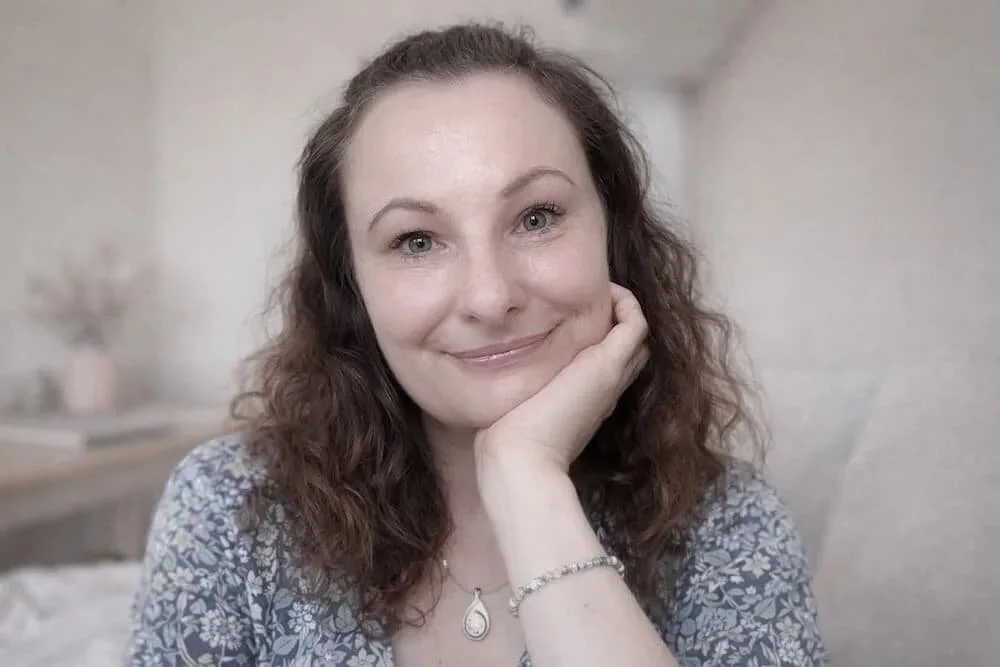
Hi, I'm Aleksandra.
I'm a BABCP-accredited CBT therapist specialising in perinatal trauma, birth trauma, and tokophobia.
I work online with women across the UK, EU and internationally, and I've spent years supporting mothers through exactly what you're describing — the terror, the grief, the guilt, the desperate hope that this time can be different.
I combine trauma-focused CBT with EMDR therapy and compassion-focused approaches. But more than the approaches I use, what I bring is this: I take birth trauma seriously. I won't tell you "at least you have a healthy baby." I won't minimise what happened to you or how it's affecting you now. I understand that what happened in that delivery room mattered — and that you deserve support to process it, not just manage it.
What Makes This Birth Different
Here's what's genuinely different this time:
You have information you didn't have before. You know what your body does in labour. You know what you need and what you don't. You know which medical professionals you trust and which you don't.
You can prepare differently. You can work with a therapist who understands birth trauma. You can request specific midwives or consultants. You can have a doula. You can write birth preferences that centre your psychological safety, not just physical safety.
You're not starting from nothing. Many women tell me: "My first birth, I had no idea what was happening to me—I was completely blindsided." This time, even though you're afraid, you have knowledge. Knowledge is power, even when it doesn't feel like it.
Your fear can be processed. Unlike last time, when you went into birth without having processed previous trauma (because there wasn't any), this time you have the opportunity to work through what happened before the next birth occurs.
When to Seek Help
Seek support if:
Your fear of birth is significantly impacting your daily life
You're having intrusive thoughts or nightmares about your previous birth
You're avoiding antenatal appointments or conversations about the upcoming birth
You're experiencing panic attacks when thinking about labour
You're considering terminating a wanted pregnancy because of fear
You feel completely alone with these feelings
You're using multiple forms of contraception despite wanting more children, because the thought of birth is unbearable
You don't have to wait until you're in crisis. Earlier intervention means more time to process trauma before your next birth.
Ready to Talk — or Not Quite Yet?
If reading this has felt like someone finally put words to what you've been living with, I'd love to hear from you.
You can book a free 20-minute conversation below. It's not a sales call — it's a genuine chance to talk about what's happening for you, whether this approach sounds right, and whether we'd be a good fit to work together. There's no pressure and no obligation.
Not ready for a call yet? That's completely understandable. Many of the women I work with weren't ready to talk at first either. You're welcome to email me instead — just a few lines about what's going on for you — and we can go from there at whatever pace feels manageable.
In our first conversation, we'll talk about:
What's happening for you right now — the fear, the flashbacks, the avoidance, whatever is most present.
What you'd most like to be different — what would "feeling ready" or even just "feeling safer" actually look like for you?
How trauma-focused therapy specifically helps with secondary tokophobia — in plain language, not therapy jargon.
Whether we're the right fit — because the relationship matters as much as the approach
You don't have to be in crisis to reach out. In fact, the earlier we can start working together before your due date, the more time we have to process what happened and genuinely prepare for what's ahead. You don't have to white-knuckle your way through this pregnancy.
Prefer to email first? Reach me at aleks@unscrewingmotherhood.co.uk
Sessions are £130 • Online across UK, EU and Internationally • Weekly sessions available
You're Not "Just Anxious"-You're Traumatised
The difference matters.
Anxiety can be managed with breathing techniques and positive thinking. Trauma needs processing. It needs someone to witness what happened to you and validate that it mattered. It needs space to grieve what you lost. It needs updating the beliefs you formed about yourself when you felt most powerless.
Your body remembers what happened last time. Your nervous system is trying to protect you. That's not weakness—that's your survival instinct doing exactly what it should.
But you can teach your nervous system that this time can be different. You can process what happened so it's a memory, not a constant present threat. You can prepare in ways you couldn't before.
You don't have to white-knuckle your way through this pregnancy, counting down to a birth you're dreading.
There's another way. One that honours your trauma, processes it, and helps you move towards birth with preparation and support rather than just survival and fear.
Frequently Asked Questions About Secondary Tokophobia
-
Birth anxiety is common and affects most pregnant women to some degree—it's normal to feel nervous about labour. Secondary tokophobia is an intense, persistent fear that significantly impacts your daily life, causes avoidance behaviours (like skipping antenatal appointments), and may include symptoms like panic attacks, nightmares, and intrusive thoughts about your previous traumatic birth. The key difference is severity and impairment: tokophobia interferes with your ability to function and prepare for birth.
-
While some symptoms may naturally decrease over time, research shows that tokophobia is most effectively treated with psychological intervention. Without treatment, the fear often intensifies as the due date approaches. Trauma-focused therapy, particularly CBT and EMDR, has strong evidence for reducing both tokophobia and birth-related PTSD symptoms. Early intervention provides more time to process trauma before your next birth.
-
Secondary tokophobia is more common than many women realise. While approximately 14% of all pregnant women experience tokophobia, this percentage is significantly higher among women who have previously experienced traumatic births. Many women suffer in silence, thinking their fear is abnormal or that they should "just get over it." You're not alone in feeling this way.
-
The fear itself doesn't directly harm your baby, but chronic stress and anxiety during pregnancy can impact both maternal and infant wellbeing. More importantly, untreated tokophobia can affect your birth experience, your ability to advocate for yourself during labour, and potentially your early bonding with your baby. This is why addressing tokophobia through therapy is so important—it supports both your wellbeing and your ability to connect with your baby.
-
In the UK, you have the right to request a planned caesarean section. If your tokophobia is severe and unlikely to respond to treatment in the available timeframe, or if vaginal birth would significantly harm your mental health, a caesarean may be considered. However, the decision should be made collaboratively with your healthcare team, ideally after exploring psychological support. Some women find that processing their trauma reduces their fear enough to consider vaginal birth again, while others still prefer a caesarean—both choices are valid.
-
Partners often struggle to understand the intensity of secondary tokophobia, especially if they viewed the first birth differently or weren't present for all of it. In therapy, we can work on preparing your partner to understand your experience and advocate for you during the upcoming birth. Many women find it helpful to bring their partner to a session to help them understand what you're experiencing and how they can support you.
-
It's never too late to seek support. While earlier intervention allows more time for trauma processing, even therapy started in the third trimester can help you develop coping strategies, create a trauma-informed birth plan, work with your maternity team, and begin processing the trauma. Many women benefit from continuing therapy after birth to complete the trauma work and address any new experiences that arise.
-
This varies depending on whether your tokophobia involves full PTSD and how complex your trauma is. Some women feel significantly better after 6-8 weekly sessions, while others benefit from longer-term support (12-16 sessions or more). The goal is to process your trauma before your due date, develop effective coping strategies, and prepare you—and your partner—for this birth. We work collaboratively to create a timeline that works for your pregnancy.
Additional Resources & Expert Information
UK Perinatal Mental Health Organizations:
- PANDAS Foundation - UK charity for perinatal mental health support
- Birth Trauma Association - Support for traumatic birth experiences
- Maternal Mental Health Alliance - UK advocacy & resources
Research & Clinical Guidelines:
- NICE Guidelines: Antenatal & Postnatal Mental Health - Clinical best practices
- RCOG: Considering a Caesarian Birth, Patient Information
- Birth Trauma Research (Prof. Susan Ayers, City University London) - Leading UK researcher
Therapy Approaches Evidence Base:
- BABCP: Trauma-Focused CBT - British Association for Behavioural & Cognitive Psychotherapies: What is Posttraumatic Stress Disorder (PTSD) and How TF-CBT is used to treat post-traumatic stress disorder
- EMDR Association UK - Evidence-based trauma therapy
International Research:
Emergency Support:
- NHS 111 (Mental Health Option) - 24/7
- Samaritans: 116 123 - Free, confidential
- PANDAS Helpline: 0808 196 4382
Let’s connect:Disclaimer:
The information provided in this article is for educational and informational purposes only. It is not intended to be a substitute for professional medical or mental health advice, diagnosis, or treatment. Always seek the guidance of your healthcare provider, mental health professional, or other qualified health provider with any questions you may have regarding your pregnancy or mental health.