Panic Attacks During Pregnancy: Why They Happen & What Helps
Panic attacks during pregnancy are common, completely understandable, and treatable. For some women they're driven by general pregnancy anxiety — for others, they're rooted in something more specific, like a previous pregnancy loss, a traumatic birth, a fear of childbirth, or a phobia of needles and blood. Understanding which one is driving yours changes what help you need. This article explains them all — and what actually works.
⏱️ Quick Read (2 minutes)
If you're pregnant and having panic attacks every day, you might be:
Waking up with your heart racing before you've even opened your eyes
Googling "can panic attacks harm my baby" at 3am (again)
Avoiding midwife appointments because even thinking about them triggers anxiety
Convinced something is terribly wrong with your baby despite reassurance
Feeling guilty that you "should" be happy but instead feel consumed by worry
This article gives you:
✅ Validation that panic attacks during pregnancy are shockingly common (nearly 1 in 5 pregnant women experience severe anxiety)
✅ Understanding of why pregnancy makes panic attacks worse
✅ The difference between normal pregnancy worry and panic disorder
✅ Evidence-based treatment that works (CBT for perinatal anxiety)
✅ Permission to ask for help without shame
Not ready to read the full article? Jump to:
You're lying in bed at 2am, heart hammering so hard you can feel it in your throat. Your breath won't come properly. You're Googling "reduced baby movements" for the third time tonight even though your baby kicked you fifteen minutes ago. Your partner is asleep next to you, completely oblivious, and you feel utterly, desperately alone.
Or maybe it hits you in Tesco. You're standing in the baby aisle trying to remember what you came for when suddenly your chest tightens, your vision tunnels, and you're absolutely convinced you're about to collapse right there between the nappies and the wipes.
If this is you, I need you to know something: having panic attacks every day whilst pregnant doesn't mean you're broken. It means you're having a completely understandable response to what your brain perceives as a life-threatening situation—even when logically, you know your baby is fine.
Nearly 1 in 5 pregnant women experience anxiety severe enough to interfere with daily life. Panic disorder specifically affects around 3% of pregnant women—which is nearly double the rate in the general population. You're far from alone, even though it feels like everyone else is glowing whilst you're drowning.
And here's what I really want you to hear: this is treatable. You don't have to white-knuckle your way through the next however-many-weeks feeling like this.
I've worked with women who were checking for blood 10+ times a day, who couldn't leave the house without having a panic attack, who were convinced they were the worst mothers in the world before their baby was even born. They got better. You can too.
⭐ "I still worry sometimes, but I'm not waking up in terror. I can actually enjoy being pregnant now. I'm excited about my baby instead of just terrified." — Client, perinatal anxiety therapy

What Panic Attacks During Pregnancy Actually Look Like
On Mumsnet, women describe panic attacks in ways that medical articles completely miss:
"I thought I was having a heart attack last night. I felt sick out of nowhere, my heart was racing and palpitating, then I started shaking and couldn't breathe. Never had this before."
"I wasn't worried or panicked, I was sat watching a film with DH. Totally calm day, nothing out of the ordinary. What do I do if it happens again?"
"It just doesn't make sense to me. We relocated and sold our house, all so stressful but now we're here and settled and have family close, this happens."
The most confusing part? Panic attacks often strike when you're not actively worried about anything. You're watching television, cooking dinner, or lying in bed—and suddenly your body goes into full fight-or-flight mode for no apparent reason.
The Physical Symptoms Are Terrifying
When you're having a panic attack during pregnancy, you might experience:
Heart pounding or racing (often over 130 beats per minute)
Chest tightness or pain
Difficulty breathing or feeling like you're suffocating
Shaking or trembling
Sweating
Nausea or feeling faint
Feeling disconnected from your body or like the world isn't real
And here's what makes it infinitely worse: you're terrified you're harming your baby.
One mother described her baby "kicking like crazy" during her panic attack, which only intensified her fear that the stress was hurting him. The cruel irony is that worrying about whether panic attacks are harming your baby becomes yet another trigger for panic.
Why Pregnancy Makes Anxiety Worse
Pregnancy doesn't just allow for anxiety - it actively creates the perfect conditions for panic to thrive.
Your Brain Is Literally Changing
During pregnancy, your brain undergoes significant restructuring to prepare you for parenthood. These changes can cause increased anxiety levels, particularly in the first trimester when hormonal fluctuations are most intense. Oestrogen and progesterone levels are surging, directly affecting your brain chemistry and mood regulation.
Normal Pregnancy Symptoms Mimic Panic
Shortness of breath? That's normal in pregnancy as your growing uterus presses on your diaphragm. But it's also a classic panic symptom. Heart palpitations? Common in pregnancy due to increased blood volume. Also a hallmark of panic attacks.
Your brain can't always distinguish between "normal pregnancy sensation" and "panic attack symptom"—so sometimes reading your own body triggers actual panic.
You're Living With Genuine Uncertainty
Unlike other worries you can resolve by checking or planning, pregnancy is fundamentally uncontrollable. You can't see inside your womb. You can't guarantee your baby is developing properly between scans. You can't prevent complications through sheer willpower.
For someone prone to anxiety, this level of uncertainty is excruciating. Your anxious brain thinks that if you just worry enough, Google enough, check enough, you can keep the bad thing from happening. But you can't—and that feeds the panic.
The "You Should Be Happy" Pressure
One mother wrote: "Some pregnant women feel upset or guilty about feeling anxious when they think they should be happy."
This guilt is toxic. You're already terrified. Now you're terrified and ashamed that you're not grateful enough, glowing enough, maternal enough. The shame intensifies the isolation, which intensifies the panic. (If your anxiety is specifically about giving birth rather than general pregnancy health worries, you might also be experiencing tokophobia or fear of childbirth, which has its own specific treatment pathway.)
Not all pregnancy panic is the same — which kind is yours?
Here's something most anxiety articles miss, and it matters more than almost anything else on this page. "Panic attacks in pregnancy" isn't one thing. For some women it's general pregnancy anxiety, and the help further down is exactly right. But for a lot of women, the panic is the surface of something more specific underneath — and naming which one changes what actually helps.
See if one of these fits you better than "just anxious":
The panic spikes around scans, and started after a loss. If your worst panic clusters around appointments and ultrasounds, and you've had a miscarriage before, this isn't general anxiety — it's a trauma response to the scan where you once got devastating news. That needs a different approach, and I've written about it specifically here: Scan Anxiety After Miscarriage: Why It Hits & What Helps.
The panic is really about the loss itself, and this pregnancy feels like waiting for it to happen again. If you're bracing for bad news the whole time because of a previous miscarriage, start here: Pregnancy After Miscarriage Anxiety: You're Not Overreacting.
This is your first pregnancy and the panic is really about giving birth. If underneath the panic is a deep dread of labour and birth itself — the pain, the loss of control — you may be dealing with tokophobia rather than general anxiety: Want a Baby but Terrified of Pregnancy and Birth? You're Not Broken and Tokophobia Treatment: How to Overcome Your Fear of Childbirth.
The panic hits around needles, blood tests or the thought of the cannula. If the appointments that floor you are the ones with bloods, and you feel faint as much as panicked, that's likely blood and needle phobia — which is very treatable: Too Scared of Needles and Blood to Have a Baby? What Helps.
You had a traumatic birth last time, and now you're pregnant again and panicking. If this pregnancy is reawakening a frightening previous birth, the panic is a trauma response to that, and it has its own pathway: Scared to Give Birth Again After Traumatic Birth? and What is Birth Trauma? Causes, Symptoms & How to Heal.
If one of those landed, follow it — that's where the help that actually fits you lives. And whichever it is, here's the thread they share: when panic is rooted in a specific fear or a past experience, standard anxiety coping has a ceiling. It manages the surface. What reaches the root is trauma-focused therapy — trauma-focused CBT and EMDR, both recommended by NICE — which works on the memory or fear underneath so your body stops treating this pregnancy as the next disaster.
If none of them fit, and it really is general pregnancy anxiety and panic — that's common too, and everything below is for you.
When Worry Becomes Panic Disorder
Some anxiety in pregnancy is completely normal. Worrying about your baby, wondering how life will change, feeling nervous about birth — that's just being human.
But there's a point where it tips into something else. Something that stops you functioning. Something that's there every single day, not just when you're at a scan or reading a difficult story.
You've probably crossed that line if the panic attacks are happening more than once or twice a week. If you're avoiding things — appointments, going out, being alone — because you're scared of having one. If you can't stop the catastrophic thoughts even when someone has just told you everything is fine. If you're exhausted from carrying this much fear and it's been weeks or months, not days.
One woman described it as "a black dog. Always in the background, niggling away. An uncontrollable fear that would catch me unaware."
That's not normal pregnancy nerves. That's your nervous system stuck in overdrive. And it deserves proper support, not just being told to breathe through it. Anxiety disorders are the most common type of mental health condition, affecting nearly 1 in 5 adults—including those who are pregnant.
The Searches You're Making at 3am
If you're pregnant and having panic attacks every day, you're probably Googling things like:
"Can anxiety hurt my baby?"
"Panic attacks every day pregnant safe?"
"Constant worry something wrong with baby"
"Can't stop thinking about baby dying"
"Pregnant and feel like I'm going crazy"
Here's what you need to know: untreated severe anxiety can increase the risk of preterm birth and low birth weight. But seeking treatment significantly reduces those risks.
The absolute best thing you can do for your baby is get help for yourself. That's not selfish - it's protective.
Why Women Wait (And Why You Don't Have To)
Most women I work with tell me they waited months before reaching out. When I ask why, the answers are always similar:
"I thought it would get better on its own." "I didn't think I was bad enough." "I felt guilty spending money on myself when we're about to have a baby." "I was scared talking about it would make it worse."
I get it. All of those thoughts make complete sense. But here's what I've noticed: the women who come to therapy earlier — at 18 or 20 weeks rather than 35 weeks — don't just get more sessions. They get to experience more of their pregnancy without the constant weight of panic.
It's not that waiting is dangerous or wrong. It's just that you have a choice about how you want to spend the rest of your pregnancy. Some of it will be filled with normal worries and discomfort — that's just pregnancy. But the daily panic attacks, the 3am Google spirals, the avoiding places because you're terrified you'll have an attack? That part is treatable.
You're not a bad mother for struggling. You're also not a bad mother for asking for help. Recognising when you need support and acting on it? That's good mothering in practice.
If you're ready to stop white-knuckling this pregnancy — I'd love to talk.
Book a free 20-minute conversation here — no pressure, no obligation. Just a chance to talk about what's been hardest and whether the way I work sounds right for you.
Not ready for a call yet? Email me instead — just a few lines about where you are is enough to start.
What Actually Helps When Panic Attacks Are Ruling Your Pregnancy
What actually changes with therapy
CBT for perinatal anxiety is recommended by NICE — but more importantly, it works. Here's what changes for women I work with:
You stop waking up at 5am in a cold sweat, immediately reaching for your phone. No more Googling "baby not moving enough at 28 weeks" for the hundredth time. You actually sleep through until your alarm — or at least, when you do wake up worried, you can talk yourself down and go back to sleep instead of spiralling for hours.
You can sit in the midwife waiting room without planning your escape route. You're not white-knuckling the chair arms, heart pounding, convinced she's going to find something terribly wrong. You can actually hear what she's saying instead of just nodding whilst panicking internally.
You stop compulsively checking. Whether it's checking for blood, obsessively monitoring baby's movements, or refreshing pregnancy loss forums, the compulsion to seek reassurance starts to loosen its grip. You can put your phone down.
You can leave the house without dread. The supermarket, the school run, meeting friends — these stop feeling like potential disaster zones where you might have a panic attack. You start doing normal things again.
You can talk to your partner about something other than your anxiety. They stop walking on eggshells. You stop needing constant reassurance. Your relationship gets some breathing room.
You start to trust your body again. Not completely, not perfectly — but enough that you're not constantly braced for disaster. Enough that you can feel a kick and think "hello, baby" instead of immediately panicking that it wasn't strong enough.
That's what's possible. It doesn't happen overnight, and it takes work. But it absolutely happens, and often faster than you'd think — many women notice a real shift within 6–8 sessions.
When the panic is rooted in trauma
If you recognised yourself in the scan, loss, tokophobia, needle-phobia or traumatic-birth descriptions earlier, this is worth saying again: standard anxiety CBT can help you cope day to day, but if the panic is rooted in unprocessed trauma, coping strategies have a ceiling. Trauma-focused CBT and EMDR — both recommended by NICE — work differently. They go to the memory or fear underneath and process it, so your body stops treating this pregnancy as a repeat of the last threat. Many women who've tried general anxiety support and found it helpful but not enough find that trauma-focused therapy finally reaches what talking around the anxiety couldn't.
A note on medication
For some women, therapy alone isn't enough — particularly if the panic attacks are severe or constant. Your GP can talk you through whether medication alongside therapy might help. Some antidepressants are considered safe in pregnancy and have been widely studied — this is a conversation worth having if you're struggling significantly. It doesn't have to be a choice between your mental health and your baby's safety. Both matter.
A note on self-help tools
There are things you can do right now that genuinely help — grounding techniques, breathing approaches that work when panic hits mid-Tesco, ways to interrupt the 3am spiral. These are real and worth having.
But they're support tools, not solutions. If panic attacks are happening every day, you need more than a breathing technique. You need someone to work with on what's actually driving them — and if a past experience or a specific fear is part of the picture, you need someone who understands the difference between managing anxiety and processing trauma.
When to Ask for Help
"But what if I'm not bad enough for therapy?"
If you're reading this entire article, you're bad enough. If panic attacks are happening more than once a week, you're bad enough. If you're avoiding things because of anxiety, you're bad enough. I promise you, I've never had a client come to me and thought "she didn't need to be here." The opposite is true—I often think "I wish she'd come sooner, before it stole so much of her pregnancy."
Look, if you're reading this article, there's a good chance you already need help.
General anxiety treatment often misses the unique challenges of pregnancy—the physical symptoms that mimic panic, the fear about your baby's safety, the uncertainty you simply cannot resolve. Perinatal anxiety needs someone who understands exactly what you're going through.
You deserve support. Whether that's with me or someone else, through the NHS or privately, therapy or medication or both - you deserve to feel better than this.
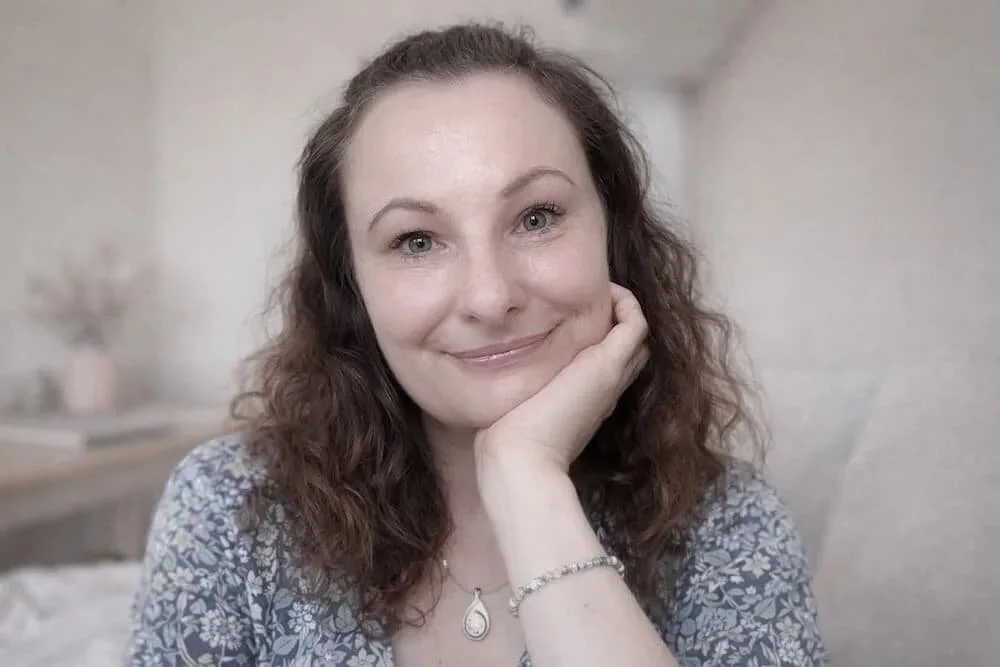
Hi, I’m Aleksandra!
I'm a BABCP-accredited CBT therapist and EMDR Therapist with over ten years of NHS experience, specialising in perinatal anxiety, birth trauma, and pregnancy after loss.
I work with pregnant women across the UK and EU who are exactly where you are right now — having panic attacks every day, exhausted from carrying this much fear through something that's supposed to feel joyful. You don't have to white-knuckle your way through this pregnancy.
You don't have to keep managing this alone.
If you've read this far, something in here has probably felt familiar. The 2am googling. The Tesco moment. The partner who doesn't quite get it. The shame about not enjoying your pregnancy the way you thought you would.
You can book a free 20-minute conversation — a real conversation about what's going on for you and whether the way I work sounds right. No pressure and no obligation.
Or if a call feels like too much right now — email me instead. Just a few lines. There's no wrong way to start.
Sessions are £130 • Online across UK and EU • Weekly sessions available
Frequently Asked Questions About Panic Attacks During Pregnancy
-
This is the fear behind so many of the others, so let's be clear: normal pregnancy anxiety and panic attacks, even daily ones, are very unlikely to harm your baby — babies are remarkably resilient. What's worth treating is the toll it takes on you. Untreated severe, chronic anxiety is linked to slightly higher risks like preterm birth, but getting support significantly reduces those risks. The best thing you can do for your baby is get help for yourself.
-
No — there's no good evidence that panic attacks cause miscarriage. Miscarriage is almost always due to factors entirely outside your control, not stress or anxiety. This is one of the most common 3am fears, and it's one you can let go of. That said, if the worry itself is relentless, that's exactly the kind of thing therapy helps with.
-
No. Panic attacks mimic heart attacks so convincingly — chest pain, racing heart, can't breathe — that calling for help is a completely reasonable thing to do, especially when you're pregnant and frightened for your baby. You didn't waste anyone's time. What it does tell you is that your panic has reached a level worth getting support for.
-
They probably don't realise a panic attack isn't something you can switch off, and that "just calm down" is a bit like telling someone to "just stop sneezing." It can help to show them this article, and to explain that reassurance-seeking (the Googling, the "is the baby okay?") actually feeds the anxiety rather than settling it — so the most helpful thing they can do is stay calm, be present, and support you to get proper help rather than provide endless reassurance.
-
No — it's never too late. Even in the third trimester, therapy can reduce the panic significantly and change how you experience the rest of your pregnancy and the lead-up to birth. And the work you do now doesn't stop at the birth — it helps you go into the postnatal period steadier too. Earlier is easier, but later is absolutely still worth it.
-
A good perinatal therapist won't force you to relive anything or sit in distress. Therapy for panic is practical and paced by you — it's about understanding what's driving it and building real tools, and where trauma is involved, approaches like EMDR work on the memory without you having to describe it in detail over and over. You stay in control of the pace the whole way through.
Let’s connect:Disclaimer:
The information provided in this article is for educational and informational purposes only. It is not intended to be a substitute for professional medical or mental health advice, diagnosis, or treatment. Always seek the guidance of your healthcare provider, mental health professional, or other qualified health provider with any questions you may have regarding your pregnancy or mental health.