Too Scared to Try for Another Baby After Miscarriage: When Fear Stops You Trying Again
If you want another baby but can't make yourself try after a miscarriage, you're not failing and you're not ungrateful. Being too scared to try again after pregnancy loss is a trauma response — your mind and body protecting you from re-experiencing something that genuinely frightened them. It's not a lack of desire or commitment. This article explains what's actually happening, the difference between grief that needs time and fear that needs processing, and how therapy can help before you conceive — not just during a pregnancy.
⏱️ Read time: 6 minutes — or jump to what you need most:
You want another baby. And you can't make yourself try.
On paper it makes no sense. You want this. You've wanted it since before the loss. Your partner is ready. The timing works. There's nothing actually stopping you.
Except you can't. Every month there's a reason. You're too tired this cycle. The timing's a bit off. You'll start properly next month. And next month there's another reason. Eighteen months go by and you're still "trying" but somehow never quite trying.
Or maybe it's more direct than that. Maybe the thought of being pregnant again floods you with a dread so physical you feel sick. Not excitement. Not hope. Dread. Because being pregnant again means being in the place where it all went wrong. It means the scans. The waiting. The bleeding you'll check for every time you go to the bathroom. It means hoping again — and you're not sure you can survive hoping again.
On Reddit, women describe it exactly: "I'm terrified to get pregnant again — not just of another loss but of what it would do to me." On Mumsnet: "We've been trying for 18 months but I keep sabotaging it. I think I'm doing it on purpose." And: "My husband is ready. I'm not. I don't know if I ever will be."
If that's you — I need you to hear this clearly. You are not failing. You are not ungrateful. You are not broken. What you're experiencing has a name and a mechanism, and it's far more treatable than you think.

Why this is a trauma response, not a failure of desire
Here's what's actually happening underneath the guilt.
When you lost your baby, your nervous system learned something. It learned that pregnancy — the thing that was supposed to bring you joy — ended in pain, loss, and grief. It learned that hoping led to devastation. And your nervous system, which has one job above all others, which is to protect you from harm, drew a conclusion: do not do that again.
This is not a conscious decision. You can't reason your way out of it by reminding yourself of the statistics. Your body is not responding to statistics. It's responding to what it lived through. The self-sabotage, the endless "not this month," the way you freeze at the thought of trying — these are not signs that you don't want a baby. They're signs that part of you is desperately trying to protect you from going through the worst thing again.
In trauma terms, this is avoidance — one of the core features of how the mind protects itself after something frightening. The threat your body is avoiding isn't pregnancy itself. It's the re-experiencing of loss. And avoidance is a deeply intelligent survival response. It's just one that's now standing between you and something you want.
This is also where it can tip into something close to tokophobia after loss — a fear of pregnancy and birth that develops specifically because of what happened before. Your body has filed pregnancy under "danger," and it's protecting you accordingly.
Understanding this changes the question. You stop asking "what's wrong with me, why can't I just do this?" and start asking "what does my nervous system need in order to feel safe enough to try?" That's a question with an answer.
Grief that needs time versus fear that needs processing
This is an important distinction, and I want to be honest about it rather than push you toward therapy you might not need yet.
Some of what you're feeling may be grief that simply needs more time. Grief after miscarriage is real, often disenfranchised, and frequently rushed by the people around you. If your loss was recent, if you're still in the thick of mourning, if the thought of another baby feels painful because you're still grieving the one you lost — that may not be something to fix. That may be something to honour. Grief has its own timeline and it cannot be hurried, and there's nothing wrong with not being ready while you're still grieving.
So how do you tell the difference?
Grief that needs time tends to soften. Even slowly, even unevenly, it moves. The pain is connected to the baby you lost — to missing them, to what would have been. When you imagine trying again, the feeling is sadness, or not-yet-ness, rather than panic.
Fear that needs processing tends to stay stuck. It doesn't soften with time — sometimes it gets worse the longer it goes on. It's connected to the future rather than the past — to what might happen, to the early weeks, to the scans, to going through it all again. When you imagine trying again, the feeling is dread, panic, or a complete shutdown. And often there's the self-sabotage — the part of you that wants it but won't let you near it.
If what you're carrying is grief, time and gentle support may be what you need. If what you're carrying is fear — particularly if it's been months or years, if it's not shifting, if you're sabotaging your own attempts, if your relationship is straining under it — that's the kind of thing that responds to trauma-focused therapy. Not because you're broken. Because the fear is rooted in something specific that can be processed.
You don't have to diagnose yourself. But if the fear has been stuck for a long time and isn't moving, that's worth paying attention to.
The fear isn't only about another loss
This is something that often gets missed — and it's important.
When people talk about fear of trying again after miscarriage, they usually assume the fear is about losing another baby. And for many women, it is. But for a lot of women, the fear is also about what another pregnancy would do to them.
You already know what the loss felt like. You know the physical experience — the bleeding, the cramping, the scan where there was no heartbeat, the management of the miscarriage, the recovery. You know the emotional experience — the grief, the way it hollowed you out, how long it took to feel like yourself again, if you even do yet.
And part of you is not just afraid of losing another baby. Part of you is afraid of surviving another loss. Of going back to that place. Of whether you'd come back from it this time. As one woman put it: "I'm terrified to get pregnant again — not just of another loss but of what it would do to me."
That's not weakness. That's your mind having an accurate memory of how much it cost you last time, and a rational fear of paying that cost again. Naming it matters, because a fear you can't name controls you more than one you can. You're not only protecting a future baby. You're protecting yourself. And that self deserves protecting too.
This is exactly the kind of fear that processing can reach. Not by promising you nothing bad will ever happen — no one can promise that — but by helping your nervous system separate the genuine risk of the future from the trauma of the past, so the past stops flooding into every thought about trying again.
When the fear is straining your relationship
For many couples, this is where it gets painful in a different way.
Your partner may be ready. They may have been ready for a while. They may be grieving too — often more quietly, often in a way that's been overlooked because everyone focused on you — and for them, trying again is part of how they want to move forward. They don't understand why you can't. You don't fully understand it either. And the gap between you becomes its own source of grief.
Maybe there's pressure, even gentle pressure, that makes you feel more frozen. Maybe there's frustration that you can't explain. Maybe you've started avoiding the conversation entirely, or avoiding the intimacy that might lead to the thing you're scared of. Maybe you feel guilty for holding both of you in limbo. Maybe you're scared that if you wait too long, you'll run out of time, and that fear sits on top of all the others.
It helps to name a few things together. This isn't you choosing not to try — it's a trauma response, and trauma responses aren't willpower problems. Your partner's readiness and your fear can both be valid at the same time; one doesn't cancel the other. And your partner may be carrying their own unprocessed grief that's worth attending to in its own right, not just as support for you.
When couples understand that the fear is a trauma response rather than a refusal or a lack of love, something often softens. The pressure eases. And when the pressure eases, paradoxically, there's often more room for the fear to start moving.
What "ready" actually means
Everyone tells you to try again "when you're ready." But nobody tells you what ready actually feels like — and so you wait for a feeling that never quite arrives, and you assume that means you'll never be ready.
Here's the clinical reality. Ready does not mean unafraid. If you wait until you feel no fear about trying again after a loss, you may wait forever, because some fear is an appropriate response to genuine uncertainty. Pregnancy after loss carries real risk and your mind knows it.
Ready means something different. It means the fear is no longer running the decision. It means you can hold the fear and the wanting at the same time, without the fear shutting everything down. It means you can make the choice from a place of clarity about what you want, rather than from avoidance of what you're scared of.
That state is reachable. Not by waiting for the fear to vanish on its own — which, when it's stuck, it often doesn't. But by processing what's underneath it, so the fear becomes something you carry rather than something that carries you.
A lot of women assume they have to wait until they feel ready before getting any help. It's often the other way around. Getting help is frequently what allows "ready" to arrive.
How therapy helps before you conceive
Most support for pregnancy after loss focuses on the pregnancy itself — managing the anxiety once you're already expecting. That matters. But there's a strong case for doing the work before you conceive, while you're still stuck at the trying stage.
Here's why. If the fear is what's stopping you trying, then waiting until you're pregnant means white-knuckling through conception and the early weeks with the trauma still completely unprocessed. Doing the work beforehand means you can approach trying again — and any subsequent pregnancy — from a more settled place, rather than carrying the full weight of the last loss into it.
Trauma-focused CBT works on the meanings you've made from the loss — "my body failed," "I can't survive this again," "hoping is dangerous" — and on the avoidance patterns that are keeping you stuck. It helps you understand the fear, separate the past from the future, and gradually reduce the avoidance that's standing between you and what you want.
EMDR therapy can be particularly powerful here, and it's worth explaining why. A miscarriage often leaves specific, vivid traumatic memories — the moment of the scan, the bleeding, a particular phrase a doctor used, the bathroom, the waiting room. These memories can stay "live" in the nervous system, intruding without warning and keeping the body in a state of threat. As a qualified EMDR therapist, I use bilateral stimulation to help the brain reprocess these memories so they become memories of something that happened, rather than something that still feels like it's happening. When those specific memories lose their charge, the fear that's built on top of them often loosens its grip considerably. For many women, this is what finally makes trying again feel possible — not because the loss no longer matters, but because it's no longer flooding the present.
Both are recommended by NICE as first-line treatments for trauma and PTSD. And both can be done now — while you're stuck, before you're pregnant — rather than waiting until the fear has already shaped another pregnancy.
What this work tends to give women isn't fearlessness. It's choice. The ability to decide about trying again from a place of clarity rather than dread. The ability to feel ready — not because the fear is gone, but because it's no longer the thing making the decision.
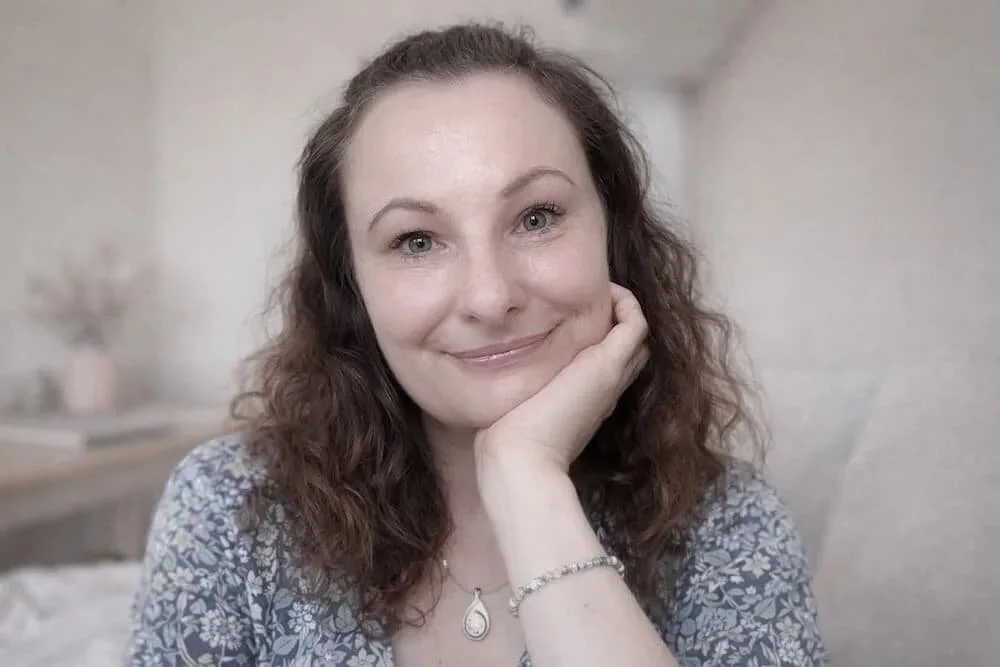
Hi, I’m Aleksandra!
I'm a BABCP-accredited CBT therapist, qualified EMDR therapist, and registered mental health nurse with over ten years of NHS experience, specialising in perinatal trauma, pregnancy after loss, and birth trauma.
I work with women across the UK, EU and internationally — including women who want another baby desperately but can't make themselves try, who are sabotaging their own attempts without understanding why, who are caught between their own fear and a partner who's ready. You don't have to stay stuck here.
You don't have to choose between your fear and the family you want.
Being too scared to try again isn't a sign that you don't want this enough. It's a sign that what you went through left a real mark — one your nervous system is still trying to protect you from. That's not a character flaw. It's something that can be worked with.
You don't have to wait until you feel ready to reach out. For a lot of women, reaching out is what allows ready to finally arrive.
If any of this has felt like reading your own thoughts — the wanting and the freezing, the guilt, the sabotage, the gap opening up between you and your partner — reach out.
You can book a free 20-minute conversation below — a real conversation about what's been happening and whether the way I work sounds right for you. No pressure and no obligation.
Or email me instead if a call feels like too much right now. Just a few lines about where you are is enough. There's no wrong way to start.
FAQ: Being scared to try for another baby after miscarriage
-
Yes — extremely common, and far more common than people talk about. After a loss, the nervous system often learns to associate pregnancy with danger and grief, which can make trying again feel impossible even when you want a baby badly. This is a trauma response, not a failure of desire or commitment. It can be worked with, particularly through trauma-focused therapy.
-
Self-sabotage in this situation is usually avoidance — a protective mechanism. Part of you wants the baby; another part is trying to keep you away from the thing that devastated you last time. The two aren't in conflict about whether you want a child — they're in conflict about whether it's safe to try. This is a recognised trauma response and it tends to ease once the underlying fear is processed rather than fought.
-
Grief that needs time tends to soften gradually and is connected to the baby you lost. Fear that needs processing tends to stay stuck, is connected to the future rather than the past, and often comes with panic, dread, or self-sabotage. If the fear has been stuck for months or years, isn't shifting, or is straining your relationship, that's a sign it may need processing rather than just more time. You don't have to diagnose yourself — but stuck, non-shifting fear is worth paying attention to.
-
Before. There's a strong case for doing the work while you're still stuck at the trying stage, rather than waiting until you're already pregnant and carrying the full weight of the last loss into it. Processing the trauma beforehand means you can approach trying again — and any subsequent pregnancy — from a more settled place. Many women find this is exactly what allows them to feel ready.
-
Yes — and it's often particularly effective here. Miscarriage frequently leaves specific, vivid traumatic memories — the scan, the bleeding, a phrase a doctor used. EMDR helps the brain reprocess these so they stop intruding and stop keeping the body in a state of threat. When those specific memories lose their charge, the fear built on top of them often loosens considerably, which is what makes trying again feel possible for many women.
-
This gap is painful but common, and it doesn't mean your relationship is in trouble. It helps to understand that your fear is a trauma response, not a refusal or a lack of love — and that your partner may be carrying their own unprocessed grief too. When couples understand the fear this way, the pressure often eases, and when pressure eases there's frequently more room for the fear to start moving. Therapy can help with this directly.
-
Ready doesn't mean unafraid. Some fear is an appropriate response to real uncertainty, and if you wait to feel no fear you may wait forever. Ready means the fear is no longer running the decision — that you can hold both the fear and the wanting at the same time, and choose from clarity rather than dread. That state is reachable, usually through processing what's underneath the fear rather than waiting for it to vanish.
-
Sometimes, particularly if it's primarily grief that needs time. But when it's a stuck trauma response — when it's not shifting, when there's self-sabotage, when it's been a long time — it often doesn't resolve on its own and can even intensify. In those cases, processing the underlying trauma is usually what allows it to move.
References & Resources:
The Miscarriage Association — helpline 01924 200799, support and information including pregnancy after loss
Tommy's: Pregnancy After Miscarriage — evidence-based information and specialist midwife service
Petals: Baby Loss Counselling — specialist counselling for pregnancy and baby loss
Sands — support for anyone affected by pregnancy and baby loss
Samaritans — 116 123, free, 24 hours
NICE NG116 — Post-traumatic stress disorder — clinical guidelines underpinning trauma treatment
EMDR Association UK — about EMDR and the evidence base
If you're having thoughts of self-harm, or feeling that you can't survive another loss in a way that frightens you, please reach out to your GP, call Samaritans on 116 123, or go to A&E. You deserve support right now.
National Institute for Health and Care Excellence. (2018). Post-traumatic stress disorder (NG116).
Let’s connect:Disclaimer:
The information provided in this article is for educational and informational purposes only. It is not intended to be a substitute for professional medical or mental health advice, diagnosis, or treatment. Always seek the guidance of your healthcare provider, mental health professional, or other qualified health provider with any questions you may have regarding your pregnancy or mental health.